Abstract:SEC PH warns on Aug. 20, 2025, that five more unregistered crypto platforms target Filipinos; enforcement and website/app blocking to follow.
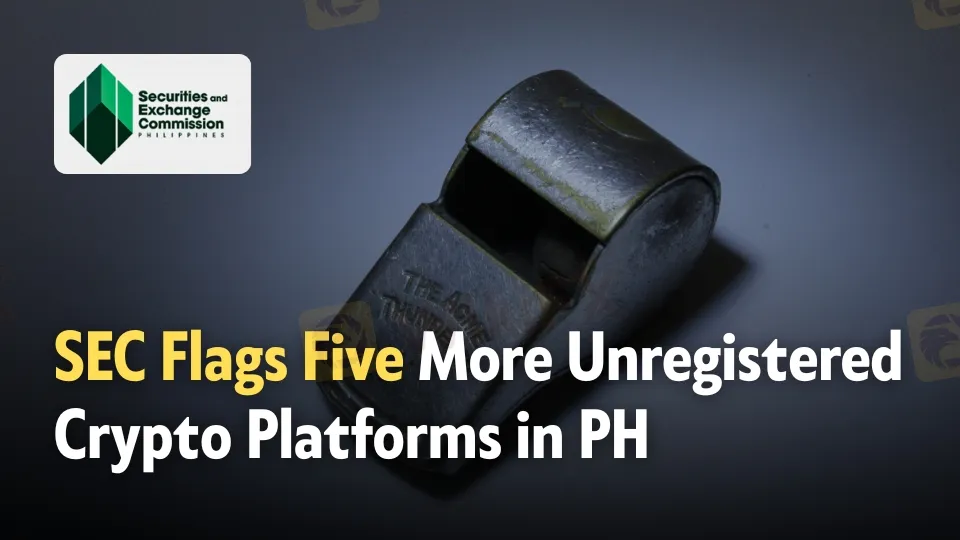
The Philippines Securities and Exchange Commission issued a new advisory on August 20, 2025, flagging five cryptocurrency platforms—Blofin, CoinW, DigiFinex, LBank, and Pionex—for offering services to Philippine users without the required registration and CASP license, warning of risks and possible website and app blocking as enforcement escalates.
Key developments
- The latest SEC Philippines crypto advisory names Blofin, CoinW, DigiFinex, LBank, and Pionex as unregistered platforms accessible in the country, some enabling localized onboarding with a Philippine +63 mobile number and PHP on-ramps.
- The August 20 advisory follows an August 1 notice that identified 10 other exchanges, including OKX, Bybit, KuCoin, Kraken, and others, which have faced ISP-led website blocking actions.
- The SEC reiterated that crypto trading is not banned in the Philippines; entities must register and comply with the SEC CASP Rules and CASP Guidelines that took effect on July 5, 2025.
Newly flagged crypto platforms (Aug. 20, 2025)
What the SEC says
The Commission stated that unregistered crypto-asset service providers (CASPs) operating in the Philippines may face cease-and-desist orders, website and app blocking, removal from app stores, and criminal complaints under securities and consumer protection laws. The agency emphasized investor protection, noting increased risks of total fund loss, lack of legal recourse, fraud, identity theft, market manipulation, and money laundering tied to unlicensed platforms.
Registration requirements under CASP Rules
Under Memorandum Circular No. 4, Series of 2025 (SEC CASP Rules), and Memorandum Circular No. 5, Series of 2025 (CASP Guidelines), providers offering crypto trading, intermediation, or marketing to Philippine residents must register with the SEC and obtain a CASP license before operating. The framework requires incorporation in the Philippines, a minimum paid-up capital of PHP 100 million (excluding crypto-assets), a physical local office, and ongoing compliance with AML, cybersecurity, and disclosure obligations.
Platforms newly flagged
- Blofin, CoinW, DigiFinex, LBank, and Pionex remain accessible in the Philippines and offer features such as localized onboarding via +63 mobile numbers and, in some cases, PHP payment methods, according to the advisory.
- The SEC stressed the list is not exhaustive and that other platforms with similar onboarding or access features targeting Philippine users without registration will be subject to enforcement.
Enforcement actions and recent blocks
The SEC has coordinated with internet service providers and platforms to implement website blocking and app store removals against previously flagged exchanges, including OKX, Bybit, KuCoin, Kraken, and others cited earlier this month. The regulator has also clarified that it will continue to update advisories and take appropriate action to limit access to non-compliant platforms during periods of heightened market activity.
Crypto trading is not banned
Clarifying public concerns, the SEC confirmed there is no blanket prohibition on crypto trading; the requirement is for all crypto-asset service providers to secure registration and comply with CASP Rules to protect investors and maintain market integrity. The Commission encouraged both local and foreign providers to register, highlighting support for a competitive but responsibly regulated market.
Investor guidance
- Verify a platforms CASP registration status with the SEC before opening accounts, funding wallets, or trading.
- Avoid unregistered crypto platforms and report unauthorized solicitations or platforms marketing to Philippine residents.
- Be alert to money laundering and fraud risks that may escalate during market volatility, especially on services lacking robust AML and consumer safeguards.
Context and background
The August 20 advisory builds on the SEC‘s July 5, 2025 rollout of the CASP Rules and Guidelines, which codify licensing, capital, AML, and operational standards for crypto-asset service providers. Legal and industry analyses note the framework’s focus on consumer protection, market integrity, and supervision mechanisms, including registration fees and supervision based on gross revenue.
How to proceed: compliance and reporting
- For providers: register for a CASP license in the Philippines, ensure local incorporation and minimum capital, and implement AML/CFT, cybersecurity, and disclosure controls aligned with the CASP framework.
- For market participants: use official SEC channels to verify registration, check if a platform has been flagged, and monitor advisories for updates on website/app blocking.
- For consumer safety: prioritize platforms that demonstrate transparent governance, robust AML compliance, and clear recourse mechanisms under Philippine regulation.
What else is happening in crypto PH and beyond
Philippine telcos have begun blocking access to previously flagged unregistered exchanges following SEC requests, indicating stepped-up enforcement across ISPs. Industry coverage continues to track advisories and enforcement actions, with local outlets highlighting the SECs message that compliance—not prohibition—guides the current policy stance.