Doo Group Rebrands UK and South Africa Units to RKX
Doo Group rebrands its UK and South Africa entities to RKX, reflecting regulatory updates and broader strategic changes.
简体中文
繁體中文
English
Pусский
日本語
ภาษาไทย
Tiếng Việt
Bahasa Indonesia
Español
हिन्दी
Filippiiniläinen
Français
Deutsch
Português
Türkçe
한국어
العربية
Abstract:BMO Capital Markets faces another SEC penalty, adding to its history of regulatory scrutiny and financial sanctions.
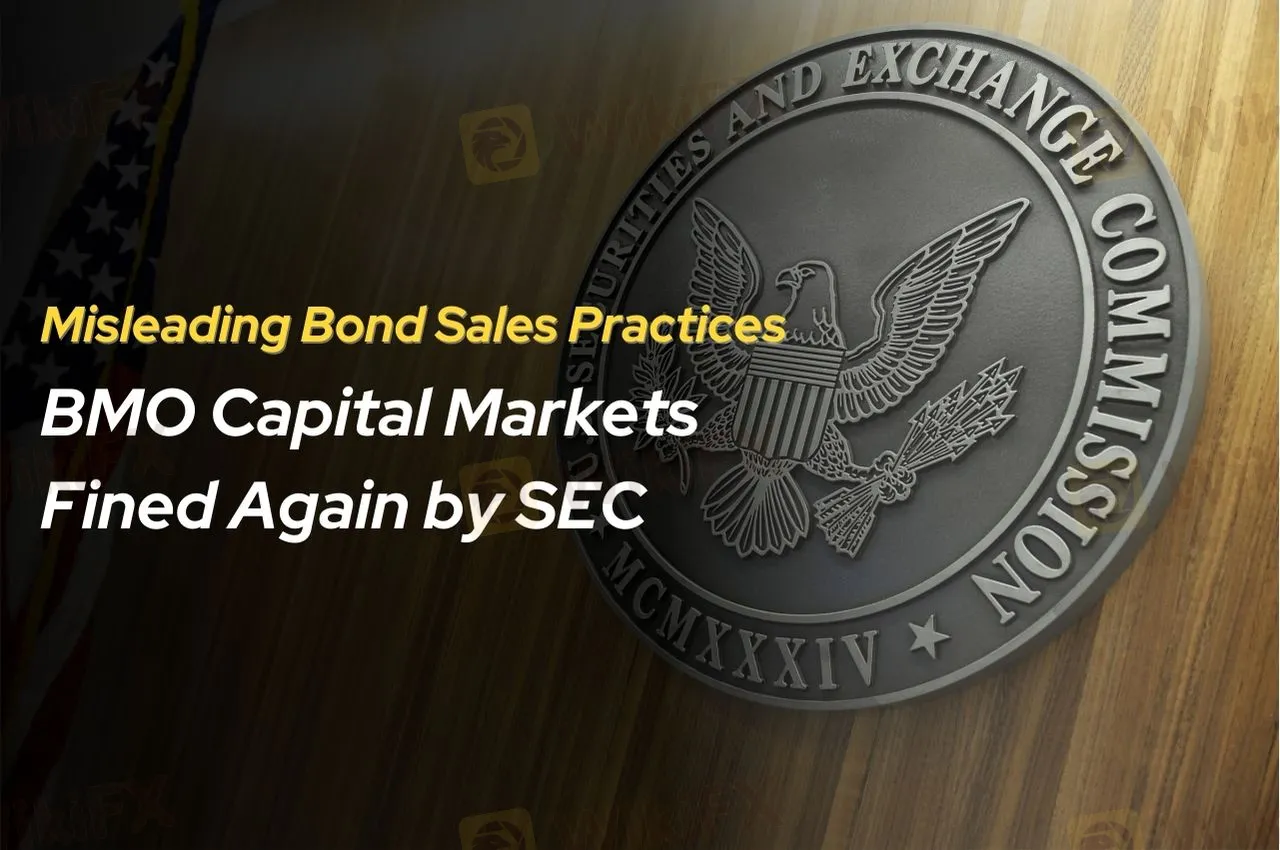
In January 2025, BMO Capital Markets faced a significant penalty from the U.S. Securities and Exchange Commission (SEC) for failing to supervise employees who misrepresented mortgage-backed bonds over a two-and-a-half-year period, from December 2020 to May 2023. According to the SEC‘s findings, BMO representatives structured mixed-collateral bonds backed by residential mortgage pools. A small percentage of higher-interest mortgages was strategically included, causing third-party data providers to generate inaccurate metrics about the bonds’ overall composition. These misleading metrics were then provided to customers.

Despite apparent inaccuracies, BMO failed to establish appropriate supervisory policies or procedures to ensure accurate representations of these bonds. Over this period, $3 billion worth of these so-called “Agency CMO Bonds” were sold under misleading conditions. This behavior was found to violate Section 15(b)(4)(E) of the Securities Exchange Act of 1934, which mandates the reasonable supervision of registered representatives. As part of the settlement, BMO agreed to pay over $40 million, including disgorgement, prejudgment interest, and civil penalties, and the SEC established a fair fund to distribute these payments to affected investors.
The recent incident is not the first time BMO Capital Markets has faced scrutiny and penalties from the SEC. The firms regulatory history includes several notable violations over the years. In 2019, BMO was penalized twice. The first penalty, amounting to over $3.9 million, was related to the improper handling of pre-released American Depositary Receipts (ADRs). The SEC discovered that BMO provided ADRs to brokers without ensuring that corresponding underlying shares were deposited, enabling short-selling and potential market manipulation.
Later that year, in September 2019, the SEC fined BMO $1.95 million for failing to provide accurate “blue sheet” data. This information, critical for investigating potential market abuses, was found to contain errors that impaired the SECs enforcement efforts.
More recently, in August 2023, BMO was fined $25 million for failing to preserve records of employee communications conducted on personal devices. This violation was part of a broader industry-wide enforcement effort targeting poor record-keeping practices.

Disclaimer:
The views in this article only represent the author's personal views, and do not constitute investment advice on this platform. This platform does not guarantee the accuracy, completeness and timeliness of the information in the article, and will not be liable for any loss caused by the use of or reliance on the information in the article.

Doo Group rebrands its UK and South Africa entities to RKX, reflecting regulatory updates and broader strategic changes.

Before trusting any broker, you need to check if it is properly regulated. The safety of your capital and fair trading conditions depend completely on how well the broker is supervised. For a thorough check on brokers like BlackBull Markets, websites like WikiFX can give you collected information, license tracking and user reviews, providing an important independent check. This article aims to answer a key question: Is BlackBull Markets a safe and regulated broker? The simple answer is yes, but the regulation setup uses two different licenses that every trader needs to understand. We will break down the BlackBull Markets regulation system, explain each BlackBull Markets license, and make clear what this setup means for you as a trader. Our review is based on facts you can check and aims to give you an unbiased, expert view.

When traders ask, "Is BlackBull Markets safe or a scam?", they want a simple answer to a hard question. The facts show two different sides. The broker began operating in 2014 and has a strong license from New Zealand's Financial Markets Authority (FMA). It also has an "Excellent" rating on review sites such as Trustpilot. But when searching for "BlackBull Markets complaints," you find many negative user stories, including withdrawal issues and poor trading conditions. This article goes beyond simple "safe" or "scam" labels. We want to carefully look at both the good reviews and common problems, comparing them with how the broker actually works and its licenses. This fact-based approach will give you the full picture of its user reputation, helping you make your own smart decision.

Is BlackBull Markets legit? Are the "BlackBull Markets scam" rumors you see online actually true? These are the important questions every smart trader should ask before exposing capital to markets. The quick answer isn't just yes or no. Instead, we need to look at the facts carefully. Our goal in this review is to go beyond fancy marketing promises and do a complete legitimacy check. We will examine the broker's rules and regulations, look at its business history, break down common user complaints, and check out its trading technology. This step-by-step analysis will give you the facts you need to make your own smart decision about whether BlackBull Markets is a good and safe trading partner for you.