


UK Retail Sales July 2026 Fall 0.5%: What the Result Means for GBP
UK retail sales fell 0.5% in July 2026, while the three-month measure rose 1.1%. See the ONS details and what the mixed result may mean for GBP.
Original

简体中文
繁體中文
English
Pусский
日本語
ภาษาไทย
Tiếng Việt
Bahasa Indonesia
Español
हिन्दी
Filippiiniläinen
Français
Deutsch
Português
Türkçe
한국어
العربية
اردو




Abstract:Trade execution is a pivotal moment for traders. It is when analysis turns into action, and potential profits or losses become reality. However, for many traders, this moment is accompanied by fear. Why does this happen, and how can you address it?
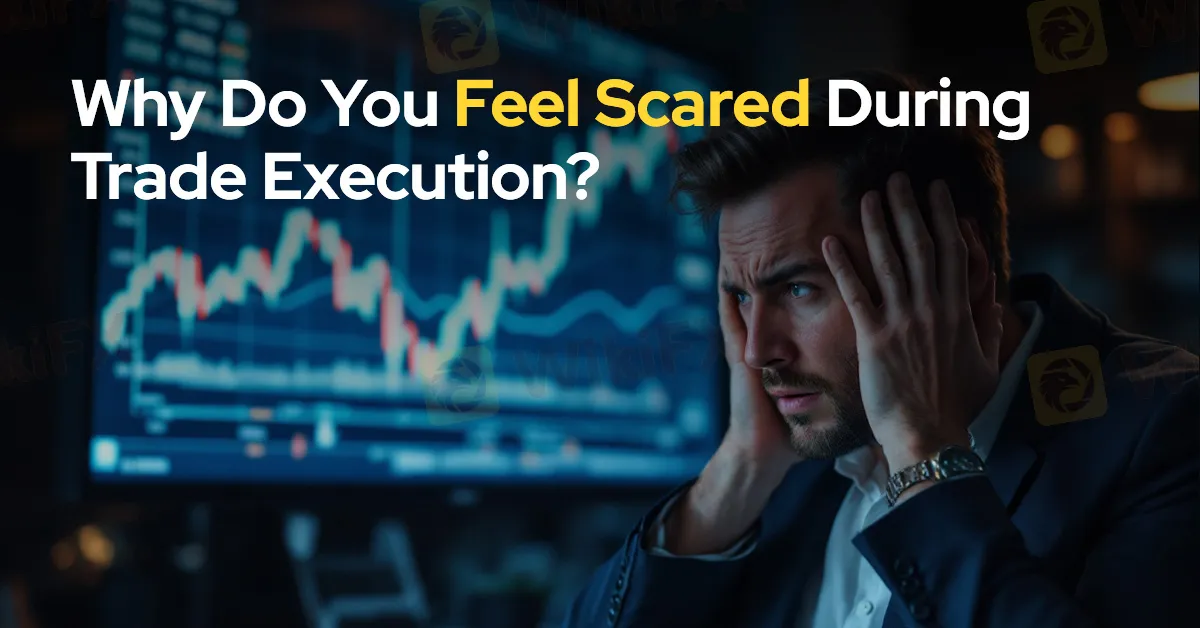
Trade execution is a pivotal moment for traders. It is when analysis turns into action, and potential profits or losses become reality. However, for many traders, this moment is accompanied by fear. Why does this happen, and how can you address it? Understanding the psychological, emotional, and risk management aspects of trading is essential to mastering this fear and making more confident decisions in the financial markets.

At its core, fear during trade execution stems from uncertainty. The market is unpredictable, and no analysis can guarantee outcomes. This uncertainty triggers a natural response rooted in our survival instincts: the fear of loss. For traders, this can manifest as hesitation, second-guessing, or even paralysis when its time to click that “Buy” or “Sell” button.
Additionally, past experiences play a role. Traders who have faced significant losses may develop a psychological barrier to executing trades, fearing a repeat of their mistakes. This is compounded by the pressure of potential financial loss, which can feel overwhelming, especially for those new to trading or operating with large positions relative to their account size.
Trading is an emotional endeavour. The fear of being wrong can evoke anxiety, while the hope of being right can create excitement. Unfortunately, these emotions can cloud judgement, leading traders to deviate from their strategies. Fear during execution is often linked to the potential regret of making a losing trade, which can weigh heavily on a traders mind.
For some, this fear can escalate into a cycle of avoidance. Traders may skip opportunities altogether, unable to face the emotional turmoil of executing trades. Conversely, others may overtrade, attempting to “win back” what they fear losing—a dangerous practice that often leads to greater losses.
One of the most effective ways to combat fear during trade execution is robust risk management. Fear often arises from the perceived consequences of a trade going wrong. By implementing strict risk management practices, such as setting stop-loss orders, using appropriate position sizing, and maintaining a healthy risk-to-reward ratio, traders can limit potential losses and reduce the emotional weight of each trade.
A clearly defined trading plan also helps mitigate fear. When you know exactly why you‘re entering a trade, where you’ll exit, and how much you‘re willing to risk, there’s less room for uncertainty. This structure provides a sense of control, which can alleviate the anxiety of execution.
Fear during trade execution is not inherently bad as it is a sign that you care about your financial decisions. However, it is crucial to manage this fear so it doesnt hinder your progress. Focus on continuous learning, practise discipline, and remember that no trader wins all the time.
Trading is as much a psychological battle as it is a technical one. By understanding the roots of your fear and taking steps to address it, you can transform this emotion from a hindrance into a tool for cautious and thoughtful decision-making. Above all, do not rush your trading journey. Mastery takes time, and patience is the foundation of long-term success.

Disclaimer:
The views in this article only represent the author's personal views, and do not constitute investment advice on this platform. This platform does not guarantee the accuracy, completeness and timeliness of the information in the article, and will not be liable for any loss caused by the use of or reliance on the information in the article.
UK retail sales fell 0.5% in July 2026, while the three-month measure rose 1.1%. See the ONS details and what the mixed result may mean for GBP.
Pakistan forex reserves stood at $22.506 billion on 13 August 2026, while the SBP dashboard showed a USD/PKR mark to market rate of 277.5713 on 20 August. This article separates the SBP forex reserves facts from predictions about the Pakistan rupee and the forex market Pakistan.
A multi-asset liquidity solution can help a broker support FX, CFDs, commodities, and indices through a more unified operating model. But adding asset classes can also create fragmented symbols, pricing, routing, margin rules, records, and client messages if controls are not designed first. This 2026 guide explains how a multi asset liquidity provider, forex CFD liquidity setup, commodity liquidity provider, and indices liquidity provider fit into a broker-owned execution service. It outlines the due-diligence questions, shared-control model, cost drivers, and 90-day implementation plan that help teams expand without making the execution chain harder to explain. The aim is not to promise deeper liquidity or better trading outcomes. It is to create evidence that a broker can supervise market access, trace order events, reconcile costs, and communicate consistently to the relevant clients when conditions are difficult.

Gold surged above $4,500 after the US Treasury expanded its purchases of longer-dated government bonds, pushing yields and the dollar lower. But this was not debt forgiveness or Federal Reserve money printing—it was a liquidity operation that exposed a much bigger fear: America may be finding it increasingly difficult to live with market-driven interest rates.
WikiFXWikiFXWikiFXWikiFXWikiFXWikiFXWikiFXWikiFXWikiFXWikiFX