


UK Retail Sales July 2026 Fall 0.5%: What the Result Means for GBP
UK retail sales fell 0.5% in July 2026, while the three-month measure rose 1.1%. See the ONS details and what the mixed result may mean for GBP.
Original

简体中文
繁體中文
English
Pусский
日本語
ภาษาไทย
Tiếng Việt
Bahasa Indonesia
Español
हिन्दी
Filippiiniläinen
Français
Deutsch
Português
Türkçe
한국어
العربية
اردو




Abstract:After several weeks of reprieve, diesel prices seem to be rising once more, in part due to the energy market's turbulence caused by worries about European supplies and fluctuating currency exchange rates.
After several weeks of reprieve, diesel prices seem to be rising once more, in part due to the energy market's turbulence caused by worries about European supplies and fluctuating currency exchange rates.
Maintaining production during the Yuletide season may not be business as usual for many companies, particularly in an era when inflation has reduced consumer purchasing power and unsold products inventories are continuing to climb.
Diesel is now being sold for over N800 per litre, a price increase of three times compared to last year when it cost an average of N254.65 per litre.
Gas prices have increased dramatically for those who use it in manufacturing, up from around $3 per standard cubic metre to $8. The cost of goods and services produced locally is affected by the increase in energy prices.
The only new refining capacity is in the Middle East and China, and it is small, so distillate stocks are below historic norms throughout areas, particularly in the United States, which is also a key supplier of oil products to the European Union. This means prices will continue high.
On the other hand, demand for diesel is consistently high due to the fuel's widespread use in freight transportation. Analysts predict that rising fuel (diesel) imports from the United States and China will cause Europe to export less to South America and Africa. Even if Europe's increased imports will benefit it in the short term, the action is expected to have an impact on two distinct continents as a whole.
Traders told Argus Research that because doing so would be extremely expensive in a market that is so steeply backwardated, most participants have little motivation to create or even maintain these discretionary inventories.
Backwardation, which is defined as the prompt price being higher than the later delivery price, indicates underlying market pressures. The backwardation over the past year has shown the high expense and difficulty of refining fuel. In contrast, using stocks has proven to be the most effective strategy to satisfy marginal demand.
Similar to this, the severe forex scarcity on the official market has caused the naira to drop below N860 versus the dollar, changing the economics of importation, distribution, and marketing of Premium Motor Spirit (PMS), generally known as gasoline and diesel.
Even though diesel is unregulated, very few marketers can stock the product to protect themselves from losses and boost their profit from selling gasoline.
According to a prominent marketer, Automotive Gas Oil (AGO), often known as diesel, is the moneymaker for any business that has access to foreign exchange and is ready to bet money on the commodity.
According to Segun Ajayi-Kadir, Director-General of the Manufacturers Association of Nigeria (MAN), the majority of manufacturers have started taking strategic steps to reduce the negative effects of the unfavorable operating environment on their operations. These steps include cutting costs, prioritizing certain products over others, and increasing their investment in the local development and production of raw materials.
He claims that when compared to the same period last year, manufacturers' costs for alternative energy sources (diesel and gas) increased by 50.6% in the first half of this year.

According to MAN data, they spent N67.7 billion on alternative energy sources in H1 2022, up from N45.0 billion in the same period previous year.
“Truly, there are FX and energy crises in the country,” he said, acknowledging the sector's energy challenges.
According to MAN, the country's rising FX and energy prices have had detrimental effects on the manufacturing sector, including fluctuating growth, a small contribution to GDP, suboptimal capacity utilization, a large stockpile of unsold manufactured items, and diminishing investment.
The unfavorable changes in manufacturing metrics, such as capacity utilisation, contribution to real GDP, investment, employment, cost of production, competitiveness, etc., are the result of crises, according to Ajayi-Kadir.
He said that businesses are making additional investments in the power value chain and pledging to increase the amount of electricity distributed in the nation by 10,000MW in order to mitigate the dangers.
The suspension of the 15% tax on imported wheat and the encouragement of investment in the local development of raw materials are other initiatives that we embrace and support.
The barriers to productivity and wellbeing, rather than the general idea of recession, are the more pressing issues that need to be addressed, according to Dr. Muda Yusuf, founder and CEO of the Centre for the Promotion of Private Enterprises (CPPE).
He pointed out that the numerous economic vulnerabilities that characterize Nigeria's economy have a catastrophic impact on enterprises.
The unprecedented rise in energy prices, which has had a significant negative impact on economic actors across all sectors, as well as the high levels of currency volatility and depreciation, the shrinking fiscal buffer, and the acute foreign exchange shortage all made his list of economic headwinds with terrible effects.
According to him, addressing the problems will aid in containing the nation's rising inflation.
It would be very good if a country with a wealth of crude oil, like Nigeria, could also develop its refining capabilities so that there wouldn't be any need to rely on imports for white goods, as that lowers energy costs for the entire Nigerian population, which is an important issue that the government should address.
It's important to look into and develop all of the affordable energy sources, such as coal. We have plenty of hydro and gas, which will allow us to develop resources and become a powerhouse in the production of energy, at least in Africa, he continued.

Disclaimer:
The views in this article only represent the author's personal views, and do not constitute investment advice on this platform. This platform does not guarantee the accuracy, completeness and timeliness of the information in the article, and will not be liable for any loss caused by the use of or reliance on the information in the article.
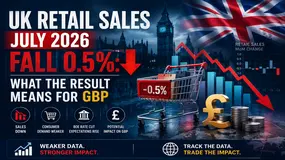
UK retail sales fell 0.5% in July 2026, while the three-month measure rose 1.1%. See the ONS details and what the mixed result may mean for GBP.
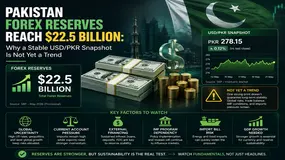
Pakistan forex reserves stood at $22.506 billion on 13 August 2026, while the SBP dashboard showed a USD/PKR mark to market rate of 277.5713 on 20 August. This article separates the SBP forex reserves facts from predictions about the Pakistan rupee and the forex market Pakistan.

A multi-asset liquidity solution can help a broker support FX, CFDs, commodities, and indices through a more unified operating model. But adding asset classes can also create fragmented symbols, pricing, routing, margin rules, records, and client messages if controls are not designed first. This 2026 guide explains how a multi asset liquidity provider, forex CFD liquidity setup, commodity liquidity provider, and indices liquidity provider fit into a broker-owned execution service. It outlines the due-diligence questions, shared-control model, cost drivers, and 90-day implementation plan that help teams expand without making the execution chain harder to explain. The aim is not to promise deeper liquidity or better trading outcomes. It is to create evidence that a broker can supervise market access, trace order events, reconcile costs, and communicate consistently to the relevant clients when conditions are difficult.

Gold surged above $4,500 after the US Treasury expanded its purchases of longer-dated government bonds, pushing yields and the dollar lower. But this was not debt forgiveness or Federal Reserve money printing—it was a liquidity operation that exposed a much bigger fear: America may be finding it increasingly difficult to live with market-driven interest rates.
WikiFXWikiFXWikiFXWikiFXWikiFXWikiFXWikiFXWikiFXWikiFXWikiFX