Abstract:When traders ask, "Is BDSWISS Safe or Scam?" The answer, based on extensive user data, points toward significant operational risks. An analysis of over 30 user complaints, combined with a low independent trust score, reveals a pattern of behavior that should concern any potential investor. The core of the issue is not about trading conditions or platform features; it is about the fundamental ability of clients to access their own funds.
We've gathered the most important findings into a simple overview. These data points together paint a picture of a high-risk environment where trader funds could be in danger.
 BDSWISS reputation analysis and review (2).png" title="BDSWISS reputation analysis and review (2).png">
The Verdict from Real User Data
When traders ask, “Is BDSWISS Safe or Scam?” The answer, based on extensive user data, points toward significant operational risks. An analysis of over 30 user complaints, combined with a low independent trust score, reveals a pattern of behavior that should concern any potential investor. The core of the issue is not about trading conditions or platform features; it is about the fundamental ability of clients to access their own funds.
We've gathered the most important findings into a simple overview. These data points together paint a picture of a high-risk environment where trader funds could be in danger.
This article will examine these findings, focusing on the consistent patterns within BDSWISS Complaints to provide a clear and evidence-based picture of the user experience. The evidence suggests a major gap between what the broker advertises and what many of its clients actually experience.
Before considering any broker, including visiting its official site, it is vital to check its current regulatory status and review the latest user complaints on independent platforms.
Regulation and Warnings
A broker's regulatory status is the foundation of its trustworthiness. In the case of BDSwiss, its primary license is held by BDS LTD. under the Seychelles Financial Services Authority (FSA), with license number SD047. This is classified as offshore regulation.
So, what does offshore regulation mean for a trader? Compared to top-tier regulators such as the Australian Securities and Investments Commission (ASIC), the Cyprus Securities and Exchange Commission (CySEC) or the UK's Financial Conduct Authority (FCA), offshore oversight is not that strict. It often involves weaker requirements for capital reserves, less demanding reporting standards, and, most importantly, limited ways to resolve disputes and recover funds if something goes wrong. For the average trader, this means much lower levels of investor protection.
This regulatory weakness is not just a theoretical concern. It is made worse by official warnings from stronger authorities. Notably, Germany's Federal Financial Supervisory Authority, BaFin, launched an investigation into a related company, “BDS Markets.” When a top-tier European regulator flags a broker's operations, it serves as a major warning sign for the entire global trading community. These warnings are not issued lightly and often point to practices that could harm consumers. The combination of a weak primary regulatory framework and a warning from a major financial watchdog creates a high-risk profile that traders cannot afford to ignore.
Understanding a broker's regulatory framework is essential. The difference between a top-tier and an offshore license can mean the difference between secure funds and a total loss. We always advise traders to verify these details before visiting a broker's website.
Analyzing User Complaints
To move beyond regulatory theory and understand the real-world impact on traders, we conducted an analysis of over 30 user complaints filed against BDSwiss. These are not isolated incidents but rather a collection of experiences that reveal widespread, recurring problems. The complaints come from a diverse range of users worldwide—from Hong Kong to Brazil, India to Morocco—all pointing to a few alarming issues. This collection of user voices provides the most compelling evidence regarding the broker's operational integrity.
Widespread Withdrawal Failures
The most alarming and consistent issue is the widespread failure to process withdrawals. This is the worst problem for any financial institution. Users report that while deposits are processed instantly, withdrawal requests are met with endless delays, excuses or complete silence. The problem appears to have gotten worse, with many complaints dating back to late 2024 and continuing through 2025.
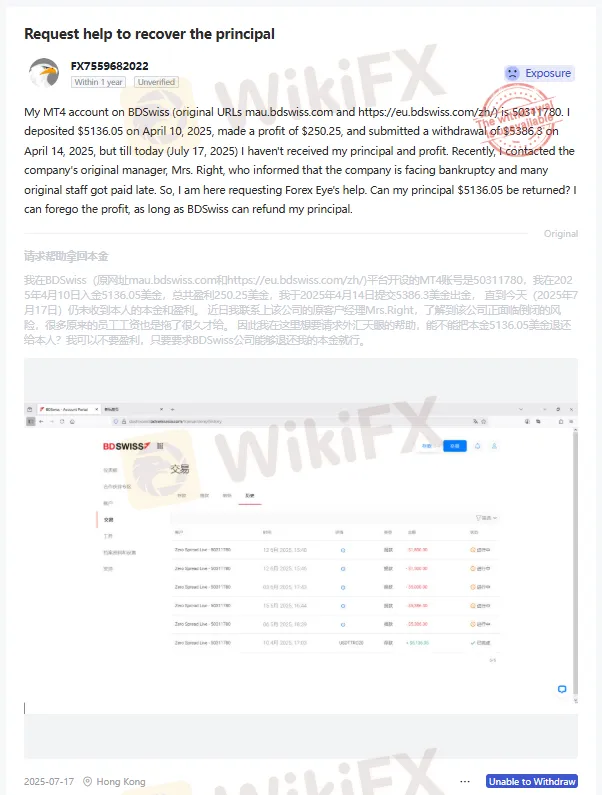
· A user from Hong Kong reported a withdrawal of $5,386.3, submitted on April 14, 2025, which remained unpaid as of July 17, 2025—a three-month delay.
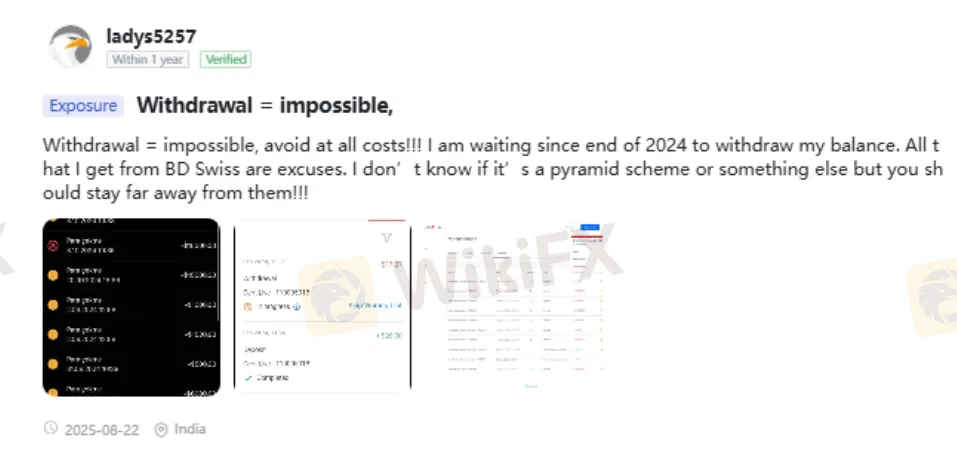
· An Indian user stated bluntly, “Withdrawal = impossible, avoid at all costs!!! I am waiting since end of 2024 to withdraw my balance.”
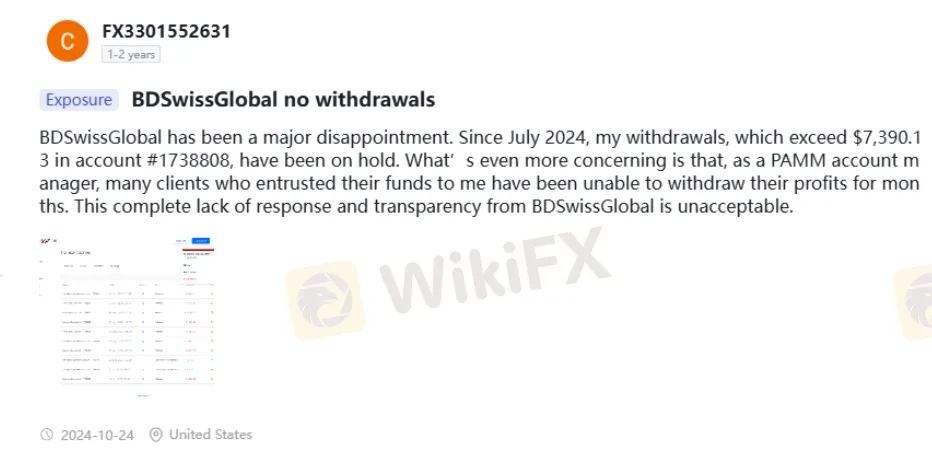
· The issue affects larger accounts as well. A PAMM account manager reported being unable to withdraw over $7,390 since July 2024, a situation that also impacts the numerous clients who trusted their funds to the manager.
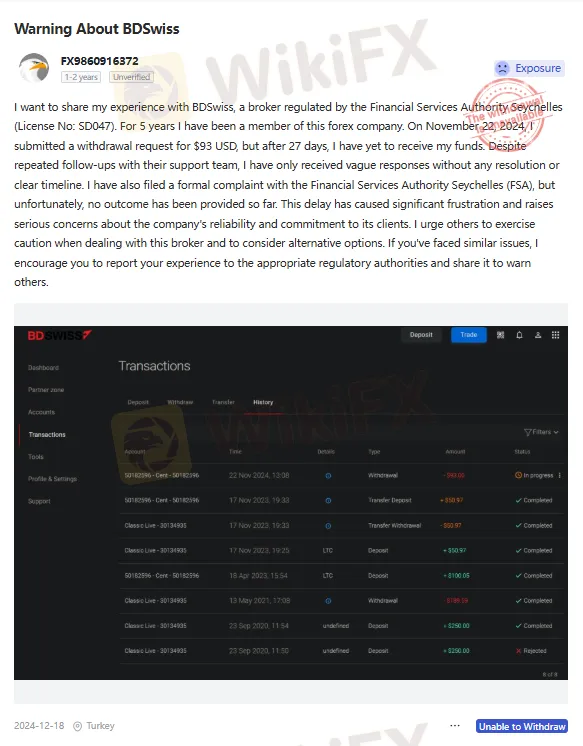
· Even small amounts are not immune. A trader from Turkey has been waiting 27 days for a $93 withdrawal.
· A user from Brazil, after depositing $267.41 and experiencing high slippage, found their withdrawal request pending since early June 2025.
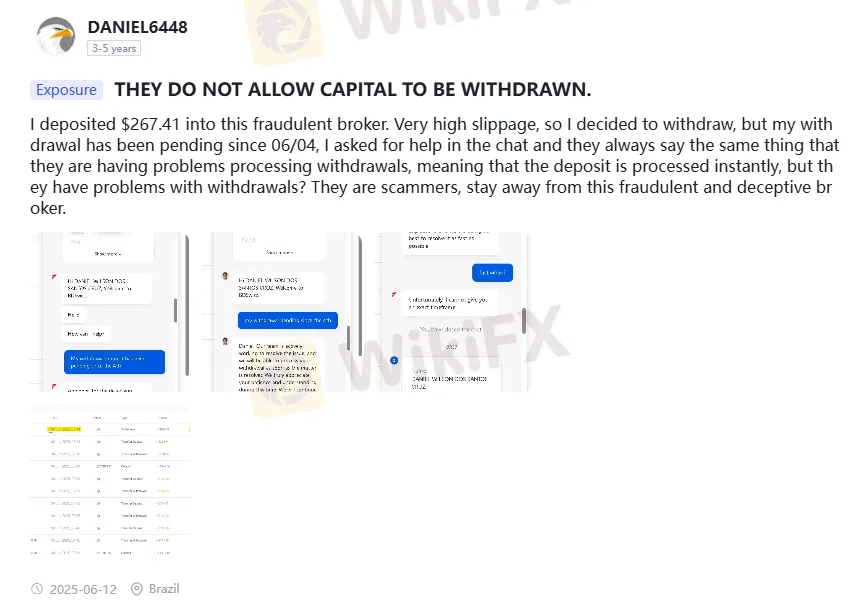
This pattern suggests that the inability to withdraw is not a random error but a potential widespread issue within the company's payment processing or, more worryingly, its cash flow.
Unresponsive Customer Support
Making the withdrawal problem worse is a customer support system that users describe as unresponsive and evasive. When clients seek answers about their missing funds, they are met with unhelpful and repetitive responses.
· Users consistently report receiving only “vague responses without any resolution or clear timeline.”
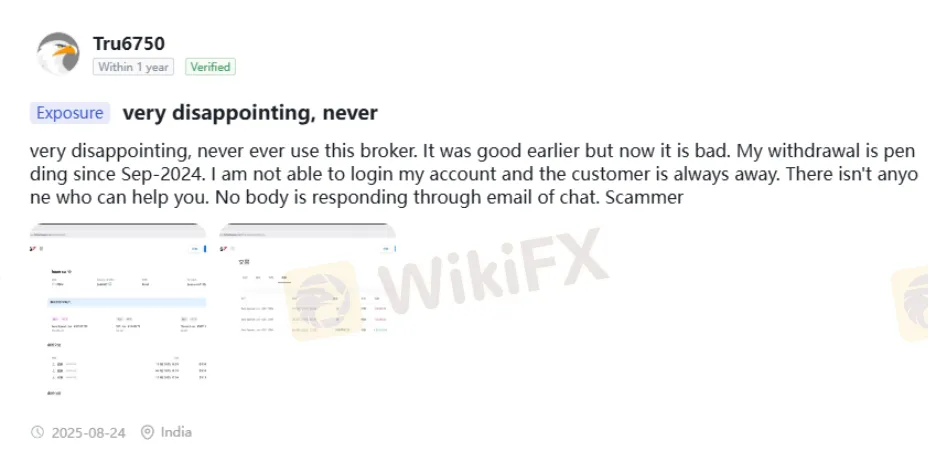
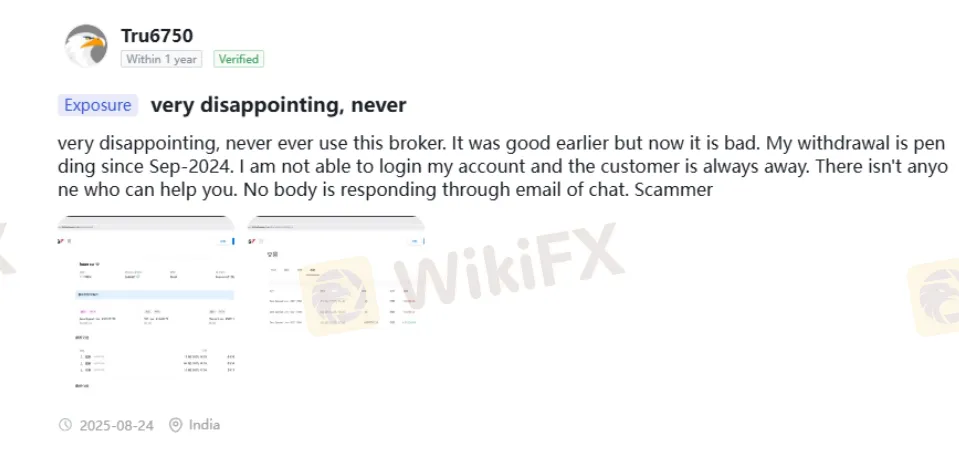
· One frustrated trader from India noted, “the customer is always away. There isn't anyone who can help you. Nobody is responding through email or chat.”
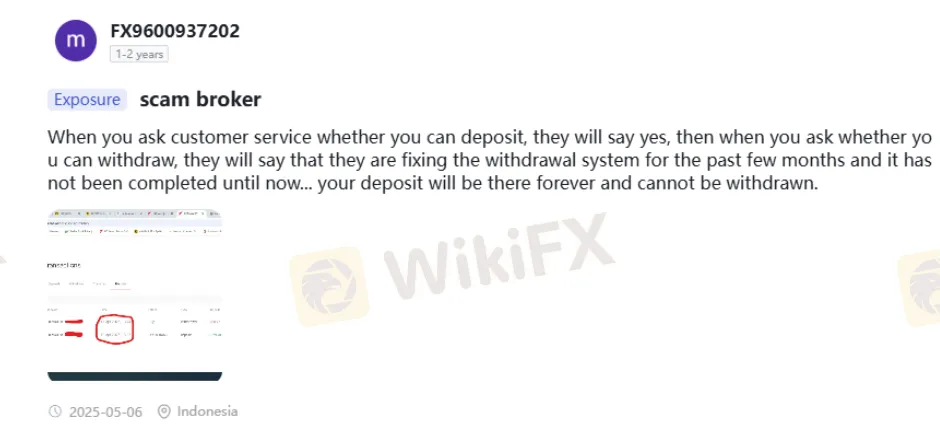
· A common excuse provided by support, according to an Indonesian user, is that the withdrawal system has been “under maintenance” or “fixing” for several months, an explanation that is hard to believe.
Effective customer support is essential for traders. When it fails, especially regarding financial transactions, it destroys all trust and leaves clients feeling abandoned and helpless.
Unfair Account Issues
Several complaints highlight another disturbing practice: the use of account fees and restrictions to further complicate the withdrawal process. This includes charging inactivity fees on accounts that have pending withdrawals, a move that is ethically questionable.
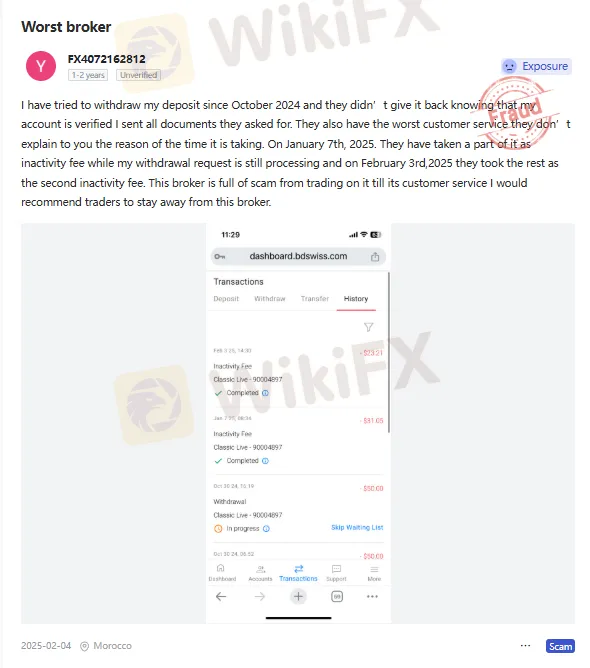
· A user from Morocco detailed a particularly bad case. While their withdrawal request had been pending since October 2024, BDSwiss charged inactivity fees in January and February 2025, effectively draining the remaining balance from the account.
· Another user from India reported being unable to log in to their trading account while a withdrawal was pending, effectively locking them out from monitoring their own funds.
These actions suggest a broker that is not only failing to return client funds but is actively finding ways to reduce it while it remains in its possession.
Serious Insolvency Claims
Perhaps the most concerning piece of evidence comes from a user who allegedly received inside information. This claim, while unverified, aligns perfectly with the widespread issues being reported.
· A user from Hong Kong, trying to recover a $5,136 deposit, was reportedly told by a company manager that “the company is facing bankruptcy and many original staff got paid late.”
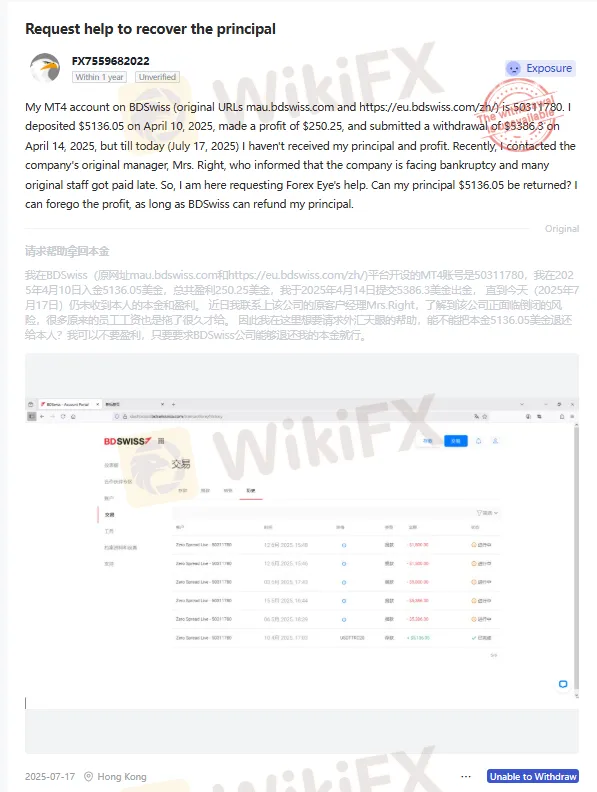
While we cannot independently verify this claim, it provides a frighteningly plausible explanation for the widespread withdrawal failures and unresponsive support. If a broker is facing insolvency, stopping withdrawals is often one of the first and most desperate measures taken. This single claim ties all the other complaints together into a coherent and deeply troubling story.
Promises vs Reality
Every broker's website is a carefully crafted marketing tool designed to highlight its best features. BDSWISS is no exception, promoting benefits such as free withdrawals, a wide asset selection, and strong support. However, when these promises are contrasted with the reality reported by users, a stark and concerning picture emerges. This disconnect is a critical factor in determining whether a broker is trustworthy.
This analysis reveals that the broker's marketing points crumble under the weight of real user experience. The attractive features advertised are overshadowed by a fundamental failure in the most critical area: fund security and accessibility.
Final Verdict
In conclusion, the evidence overwhelmingly suggests that engaging with BDSWISS carries an unacceptably high level of risk for traders. The question of whether BDSWISS is safe or a scam cannot be answered with a simple label, but its behavior aligns with the most severe red flags in the industry. The combination of weak offshore regulation, a formal investigation by Germany's BaFin, and, most importantly, a massive and consistent volume of BDSWISS Complaints centered on withdrawal failures, paints a damning picture.
The patterns are clear: funds go in easily but do not come out. Customer support offers excuses instead of solutions. Accounts with pending withdrawals are allegedly being drained by fees. And a concerning report from a user suggests the company may be facing insolvency. These are not the hallmarks of a reliable and trustworthy broker. They are signs of a firm in distress or, worse, one that is not operating in good faith.
While the broker may tempt new traders with features such as high leverage and a low minimum deposit, these are rendered meaningless by the critical and unresolved issues regarding fund safety. Our final recommendation is one of extreme caution. The risk of being unable to access your capital and profits appears to be substantial and well-documented by a global community of traders.
Before committing funds, we urge every trader to carefully research their broker on independent databases and check for the latest user exposure reports, rather than relying on the broker's own claims on their website.
Download the new WikiFX App crafted to enhance your experience with improved broker regulation inquiries. Scan this QR code to get started.