

Global Broker Regulation Inquiry App
About WikiFX
English
简体中文
繁體中文
English
Pусский
日本語
ภาษาไทย
Tiếng Việt
Bahasa Indonesia
Español
हिन्दी
Filippiiniläinen
Français
Deutsch
Português
Türkçe
한국어
العربية
اردو


The RM47,000 Lesson: Experienced Investor Falls for WhatsApp Investment Scam

WikiFX
|


Abstract:An experienced investor lost RM47,000 to a WhatsApp investment scam over the course of one week.
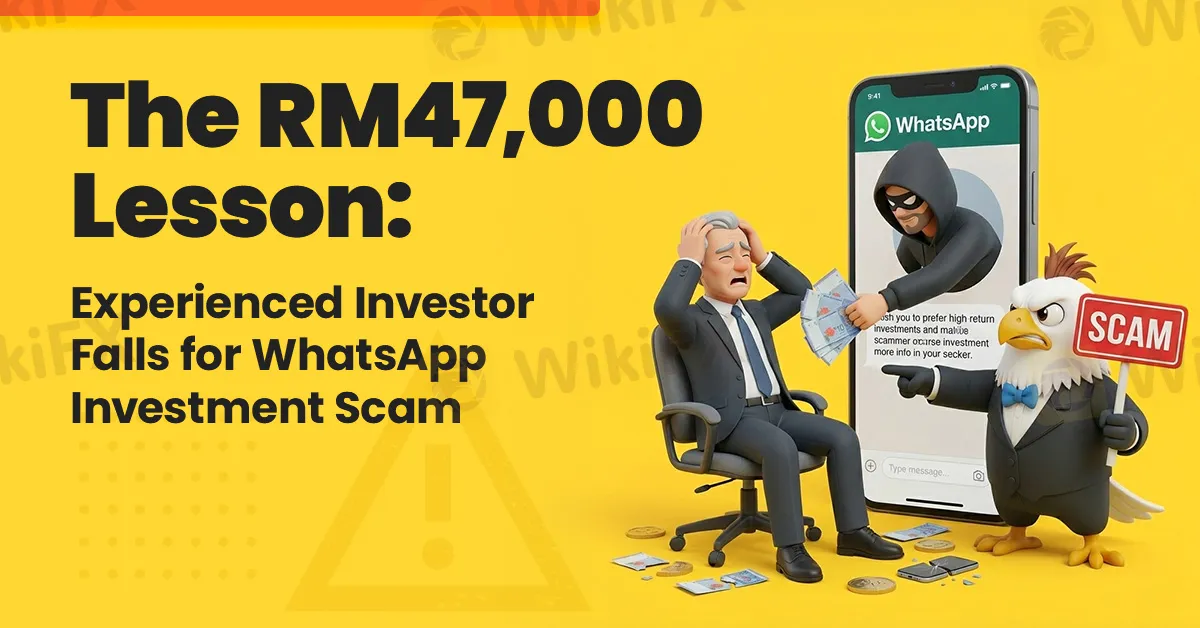
Even experienced investors are not immune to fraud. A retired professional with years of experience dabbling in the stock market recently learned this the hard way, losing RM47,000 in an elaborate online investment scam that unfolded over the course of a single week.
The scheme began innocently enough on Facebook, where advertisements promoted free stock investment lessons. Curious, the retiree clicked on the link and was directed to join a WhatsApp group. There, he encountered what appeared to be a structured learning environment, complete with a “teacher” offering daily market insights and an “assistant” who maintained regular contact.
The assistant messaged him three times a day (morning, afternoon and evening) while nightly reminders ensured he attended the group‘s stock trading sessions. The steady communication created an impression of professionalism and dedication. Within the group, members frequently praised the teacher’s stock recommendations, reinforcing the credibility of the operation.
In reality, the majority of those participants were part of the scam. It later emerged that around 80 per cent of the phone numbers in the WhatsApp group were controlled by the fraudsters themselves. These fake members claimed to invest alongside newcomers, sharing supposed gains and expressing gratitude for profitable tips. The staged enthusiasm was designed to build trust and create social proof.
The scammers operated through an online trading application under their control. Investors were encouraged to deposit funds into what was described as an “institution account” managed by the teacher. This arrangement, presented as a way to benefit from expert trading strategies, effectively handed full control of the funds to the fraudsters.
To someone familiar with stock trading, the system appeared convincing. The platform resembled legitimate investment software, complete with account balances and trading activity.
The psychological manipulation was subtle but effective. Initially, the retiree was given an account credited with RM10,000 in virtual funds. He had not invested any of his own money at this stage. Over several days, the account balance appeared to grow steadily, reaching RM15,000 and then RM17,000.
Encouraged by the apparent returns, he attempted to withdraw the profits. That was when the conditions changed. He was informed that in order to participate fully and activate withdrawals, he needed to deposit RM3,000 as a registration fee. By then, the credited RM10,000 had supposedly grown to RM17,000, creating the impression that even after paying the RM3,000, he would still be in profit.
Once he transferred the RM3,000, the amount was deducted from the credited funds. The illusion of profit remained intact, and the platform continued to show attractive gains. The structure was designed to distort judgment. The rapid growth of the account balance created excitement and a fear of missing out.
Over the next five days, caught up in what experts often describe as a “game of psychology”, he transferred additional sums of RM5,000 and RM10,000 at a time. By the end of the week, he had deposited RM47,000.
When he eventually tried to withdraw his money, the tone shifted. The scammers provided various excuses for delays and imposed new conditions, including demands for further payments to process withdrawals. It was at this point that he realised he had been deceived.
Earlier in the process, the fraudsters had allowed small withdrawals of around RM500. These limited payouts were deliberate. By permitting minor transactions, they strengthened the illusion of legitimacy and reassured victims that the system was genuine.
After discovering the fraud, the retiree lodged a detailed police report. He compiled extensive documentation, including WhatsApp conversations, profile details, bank account numbers used by the scammers, transaction dates and copies of transfer receipts. Reports were also submitted to the National Scam Response Centre, the Commercial Crime Investigation Department, the Malaysian Communications and Multimedia Commission, the Securities Commission, Bank Negara Malaysia, financial institutions and telecommunications providers.
The case highlights the scale of the problem. According to official figures, Malaysia recorded RM1.6 billion in losses from 35,000 scam cases last year alone. That equates to roughly 96 victims each day and daily losses of RM4.3 million.
The victim now warns that investment scams often exploit greed and the promise of quick returns. Complacency, he suggests, is dangerous. Many assume they are too knowledgeable or cautious to fall victim, yet fraudsters are increasingly sophisticated and skilled at manipulating trust.
Industry observers point to several common red flags. A strong sense of urgency, unexpected contact, unusual payment requests and promises of returns that seem too good to be true are all warning signs. Requests for secrecy and suspicious links should also raise immediate concern.
As online trading grows in popularity, so too does the ingenuity of those seeking to exploit it. This case serves as a stark reminder that in the digital age, even seasoned investors must remain vigilant. Confidence and experience offer no guarantee of protection when fraudsters combine technology with carefully crafted psychological tactics.
Disclaimer:
The views in this article only represent the author's personal views, and do not constitute investment advice on this platform. This platform does not guarantee the accuracy, completeness and timeliness of the information in the article, and will not be liable for any loss caused by the use of or reliance on the information in the article.
WikiFX Broker
Latest News
57 Booked in Pune Forex Scam Probe: The Fake Trading App Checklist Every Indian Investor Needs
WikiFXOANDA Broker: Regulated but Is It Really Safe for Traders?
WikiFXYen Surges on Joint Intervention
WikiFXVonway Review: Users Report Withdrawal Blocks and Account Freezes , What Traders Should Know
WikiFXMangaluru Woman, 61, Loses Rs 16.2 Lakh in Facebook Scheme
WikiFXATFX Trading Volumes Drop 29% After Record Q1
WikiFXAI GOLD Review: Is Your Deposit Safe?
WikiFXFD Review: What Traders Should Know Before Depositing
WikiFXWhy a 90% Win Rate Can Still Lose You Money
WikiFXRazor Markets Review: What Traders Should Know Before Depositing
WikiFX