Abstract:JPMorgan launches MONY, a blockchain-native money market fund, signaling tokenized finance’s shift into institutional competition.
 Contents
JPMorgans Landmark Blockchain Move
JPMorgan Chase made headlines by introducing MONY, a tokenized money market fund built directly on Ethereum. The announcement marked a turning point for traditional finance, challenging long-held assumptions that blockchain would never reach core cash products. For years, executives suggested distributed ledgers might streamline payments or settlements but not touch the foundation of cash itself. That belief has now been decisively overturned.
JPMorgan, a $4 trillion financial institution, placed one of the safest and most established financial instruments onto a public blockchain. Tokenization—the process of converting real-world assets such as cash, securities, or property into digital tokens—allows ownership, transfer, and settlement to occur seamlessly on-chain.
Why Tokenized Funds Matter
Supporters argue that blockchain-based money market funds deliver efficiency gains. Settlement can occur nearly in real time rather than waiting until the end of the trading day. On-chain ownership records are programmable, transparent, and auditable. Integration with digital payments becomes easier, enabling cash to move as fluidly as information across networks.
What makes MONY distinctive is its native blockchain design. Unlike tokenized records of off-chain funds, MONYs ownership tokens exist directly on Ethereum. This opens pathways to interoperability with broader digital asset infrastructure, even though access remains tightly controlled for now.
Regulatory Confidence and Institutional Adoption
The timing aligns with regulatory clarity. In the United States, the GENIUS Act has established oversight for stablecoins and tokenized assets, giving banks greater confidence to deploy compliant on-chain products. Institutions that once observed crypto from the sidelines now face a recalibrated risk environment.
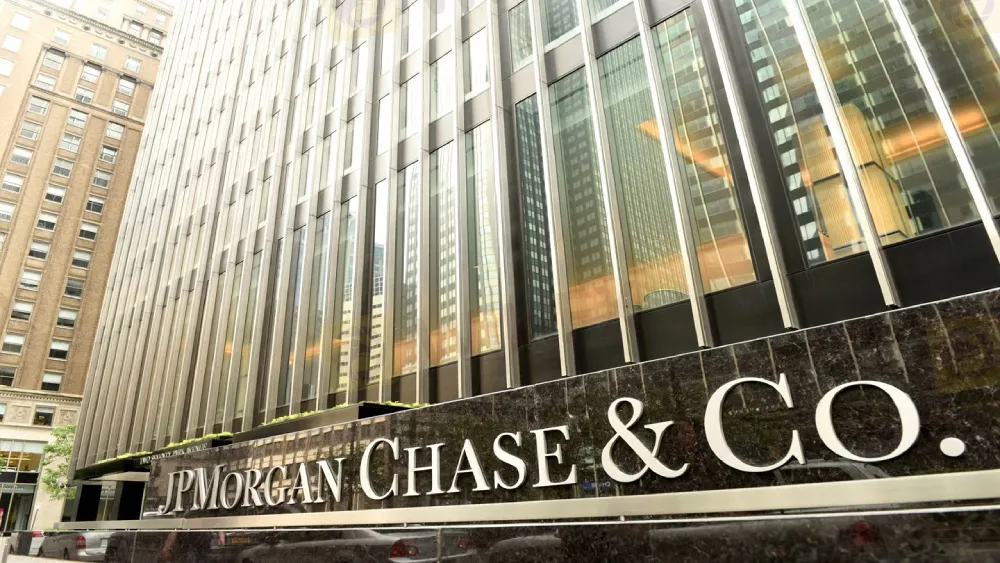
For JPMorgan, MONY signals that tokenized finance is no longer experimental. It is entering the competitive arena of global banking, where compliance frameworks and risk management are prerequisites for scale.
Competing Visions in Tokenized Finance
Goldman Sachs and BNY Mellon
JPMorgan is not alone in pursuing tokenized cash. Goldman Sachs and BNY Mellon previously launched a joint initiative focused on tokenizing ownership records of existing funds. Their approach mirrored traditional assets rather than creating blockchain-native products.
BlackRock, Fidelity, and State Street
BlackRock has already attracted billions into tokenized Treasury offerings, while Fidelity and State Street are exploring similar structures. In Asia, Hong Kong regulators approved tokenized short-term yield products for institutional investors, underscoring global momentum.
Diverging Approaches to Blockchain
These initiatives reveal a divide in philosophy. Some institutions view blockchain as a new operating layer for finance, reshaping infrastructure entirely. Others treat it as a more efficient database that preserves existing control structures. Both camps claim progress, but they are building toward different futures.
Critics highlight that MONY remains inaccessible to retail investors and requires high minimum commitments. Secondary market liquidity is limited, raising concerns that tokenization could reinforce financial gatekeeping rather than dismantle it.
Supporters counter that institutional trust must precede openness. Large capital pools demand compliance, custody, and risk management before broader access. From this perspective, bank-led tokenization is not a betrayal of blockchain principles but a necessary step toward scale.
Strategic Implications for Boards and Investors
The critical question is not whether tokenized money market funds will expand, but how leaders respond. Boards should evaluate how on-chain cash products could reshape treasury operations, settlement risk, and competitive positioning. Ignoring tokenized finance may soon carry as much risk as adopting it prematurely.
For individual investors, access remains limited, yet the signal is clear. Tokenized cash demonstrates how yield and liquidity are likely to evolve—faster settlement, programmable ownership, and greater digital control.
From Experimentation to Competition
The launch of MONY is less about a single product and more about a market signal. Tokenized cash has advanced from pilot projects into direct competition among the worlds largest financial institutions. The debate is no longer about whether tokenized finance will grow, but how quickly it will reshape the systems underpinning everyday money management.