

Global Broker Regulation Inquiry App
About WikiFX
English
简体中文
繁體中文
English
Pусский
日本語
ภาษาไทย
Tiếng Việt
Bahasa Indonesia
Español
हिन्दी
Filippiiniläinen
Français
Deutsch
Português
Türkçe
한국어
العربية
اردو


A Shock in Venezuela and a Warning to Iran: Why Global Tensions Are Rising

WikiFX
|


Abstract:The sudden removal of Venezuelan President Nicolás Maduro by the United States has sent strong signals across the world.
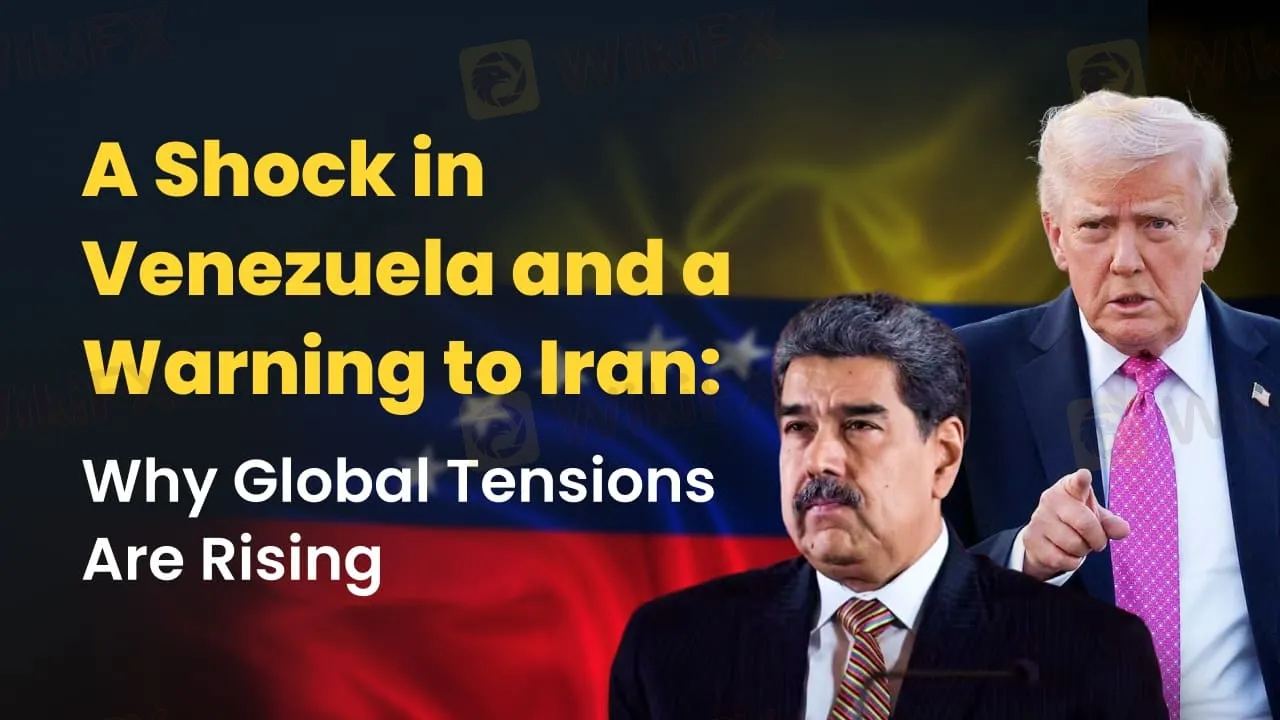
The sudden removal of Venezuelan President Nicolás Maduro by the United States has sent strong signals across the world, sparking fresh concerns about global stability. While the event took place in Latin America, its impact is being felt much further away, including in the Middle East, where tensions involving Iran are already high.
Shortly after Washington confirmed that Maduro had been taken to the US, Israeli political leader Yair Lapid warned Iran to observe the situation closely. His remarks were widely interpreted as a reminder that powerful nations may still use forceful measures to deal with governments they oppose.
The timing of the incident has added to international unease. It occurred less than a week after US President Donald Trump met Israeli Prime Minister Benjamin Netanyahu and renewed warnings of possible military action against Iran. Although Venezuela and Iran face different challenges and have separate relationships with the US, analysts believe the events are connected by a broader shift in American foreign policy.
Experts following international affairs say the action against Maduro has increased uncertainty and reduced trust between major powers. From Tehrans point of view, the incident reinforces long-standing doubts about whether the US is willing to engage through dialogue. Instead, it strengthens the belief among some Iranian leaders that military strength is necessary to prevent similar actions against their country.
Observers note that this mindset makes diplomacy more difficult. Iran has shown little interest in negotiating with the Trump administration, viewing its demands as extreme and one-sided. As a result, the chance of peaceful talks has narrowed, while the risk of confrontation has grown. Israel, Iran and the US now appear to be moving along a path where miscalculation could lead to open conflict.
The situation is further complicated by the close relationship between Iran and Venezuela. Both countries have faced heavy US sanctions and have worked together to expand trade, particularly in energy and industrial sectors. These ties have been worth billions of dollars and have helped both sides cope with economic pressure.
US officials have long accused the Venezuelan government of criminal activities and have repeatedly highlighted the countrys large oil reserves. Some American leaders have also claimed that Venezuela helped Iran and allied groups gain influence in the Americas, although these allegations have not been supported with public evidence.
With Maduro removed, Iran risks becoming more isolated on the global stage. Its regional influence has already weakened following political changes in Syria and pressure on Hezbollah in Lebanon. In response to the US action, Iranian authorities condemned the move as unlawful and called on the United Nations to step in, warning that such actions threaten international peace and weaken respect for global rules.
Despite this, Irans leadership has responded firmly. Supreme Leader Ali Khamenei repeated that Iran would not surrender to external pressure, signalling that the country intends to stand its ground regardless of US actions.
President Trump, meanwhile, has continued to issue strong warnings. During his recent meeting with Netanyahu, he stated that Iran would face further attacks if it attempted to rebuild its missile or nuclear programmes. These comments follow a brief but intense conflict earlier this year, when Israel and later the US carried out strikes on Iranian targets.
Although Washington has claimed these attacks severely damaged Iran‘s nuclear capabilities, Iran’s political system remained intact. Tehran responded by launching large numbers of rockets towards Israel, showing that it still has the ability to strike back.
Some international analysts believe that changing Irans leadership has long been an objective for Israel and that the US may now be more open to this idea. Trump has also warned of possible action if Iranian authorities respond violently to protests within the country.
However, specialists caution that carrying out an operation similar to the one in Venezuela would be far more difficult in Iran. The country has prepared for such scenarios and has the capacity to respond across the region, making any attempt to remove its leaders highly risky.
Even in Venezuela, the situation remains unsettled. Vice President Delcy Rodríguez has taken over as acting president and insists that Maduro is still the nation‘s legitimate leader. The US, however, appears determined to reshape Venezuela’s future, with Trump openly discussing control over its oil resources and even suggesting the use of ground troops.
Some experts believe that if the US becomes heavily involved in Venezuela, it may reduce its ability to engage in another major conflict elsewhere, including Iran. Others point to energy markets, noting that access to Venezuelan oil could help offset global supply disruptions if tensions with Iran escalate, especially given the importance of the Strait of Hormuz to world oil flows.
For countries like Malaysia, which depend on global stability and steady energy markets, these developments matter. What began as a political crisis in Venezuela is now raising wider questions about power, force and the future of international relations in an increasingly uncertain world.

Disclaimer:
The views in this article only represent the author's personal views, and do not constitute investment advice on this platform. This platform does not guarantee the accuracy, completeness and timeliness of the information in the article, and will not be liable for any loss caused by the use of or reliance on the information in the article.
WikiFX Broker
Latest News
British Pound edges higher as USD softens ahead US jobs data
WikiFXPolish Zloty: Fiscal slippage and cautious NBP weigh – Commerzbank
WikiFXNew Zealand Dollar steady above 0.5900 as traders eye RBNZ, Fed
WikiFXGermany flash HICP growth remains slower than expected at 2.9% in August
WikiFXUSD/JPY Forecast: Retreats from one-month high but dip-buying eyed
WikiFXNew Zealand Dollar: RBNZ seen hiking in September – UOB
WikiFXForex Today: Attention shifts to US ISM, JOLTs and inflation in Europe
WikiFXEuro strengthens against Canadian Dollar ahead of Germanys HICP data
WikiFXSilver Price Forecast: XAG/USD trades flat around $66.60 ahead of US data
WikiFXEuro: Limited downside, range defined against US Dollar – Scotiabank
WikiFX