


India Q1 FY27 GDP Growth Hits 7.8%: 3 Scenarios for INR and Gold
India's Q1 FY27 GDP grew 7.8%, beating a 7.4% poll and RBI's 7.0% projection. See three conditional scenarios for INR, rates and gold.
Original

简体中文
繁體中文
English
Pусский
日本語
ภาษาไทย
Tiếng Việt
Bahasa Indonesia
Español
हिन्दी
Filippiiniläinen
Français
Deutsch
Português
Türkçe
한국어
العربية
اردو




Abstract:Westpac has been fined NZ$3.25 million by the New Zealand High Court for misleading pricing practices that impacted over 24,000 customers due to systemic failures.

Westpac New Zealand has been fined NZ$3.25 million after the High Court ruled that the bank misled thousands of customers over a decade by failing to apply agreed discounts under various promotional banking packages. The decision followed civil proceedings brought by the Financial Markets Authority (FMA), in which Westpac admitted it overcharged at least 24,621 customers between 2013 and 2024. Total excess charges reached NZ$6.35 million.
The misconduct revolved around the banks promotional offers, such as the Employee, Gold and Platinum (EGP) packages, as well as other personal and business bundle deals and Business Transact Accounts (BTA). These offers promised customers preferential fees or waived charges across accounts, credit cards, and insurance services. However, in many cases, Westpac failed to apply the benefits, even though account statements and renewal notices indicated that discounts were in place.
According to the FMA, the problem stemmed from systemic deficiencies. While staff were expected to manually track which customers were eligible for special pricing, the bank lacked the operational capacity to enforce those entitlements across new products or services. For EGP packages, nearly one-third of qualified customers were charged more than they should have been. Similar issues affected other bundled services, with between 32% and 43% of eligible users receiving incorrect pricing.
Business clients were also affected. Those with BTA accounts were charged higher maintenance fees than agreed, due to internal coding errors and outdated manual processes. Despite this, statements issued to clients falsely indicated compliant pricing. FMA Head of Enforcement Margot Gatland criticized the lack of reliable systems: “Westpac used preferential pricing as a promotional tool, but its systems could not deliver on those promises.”
Justice Venning noted that the banks failings were not intentional or malicious, but emphasized that this did not excuse the extent of the problem. “While systems were in place, they were clearly insufficient,” he said in his ruling.
Westpac has since repaid affected customers in full and cooperated fully with regulators. The FMA acknowledged the banks remedial actions but stressed the importance of accountability. “This penalty reflects the scale of customer harm,” said Gatland. “Trust between financial institutions and customers relies on fair treatment and honoring contractual terms.”
The case serves as a reminder that even without deliberate wrongdoing, poor internal controls can result in significant regulatory penalties and reputational damage.
Disclaimer:
The views in this article only represent the author's personal views, and do not constitute investment advice on this platform. This platform does not guarantee the accuracy, completeness and timeliness of the information in the article, and will not be liable for any loss caused by the use of or reliance on the information in the article.

India's Q1 FY27 GDP grew 7.8%, beating a 7.4% poll and RBI's 7.0% projection. See three conditional scenarios for INR, rates and gold.
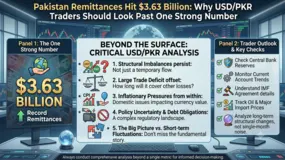
Pakistan remittances reached $3.631 billion in July 2026, up 13% year on year and 4.5% from June, according to the latest State Bank of Pakistan data release. The SBP remittances update is a useful external-sector input, but it is not a currency forecast. This guide explains what the inflow can mean for the Pakistan forex market and USD PKR, and what it cannot prove about the next Pakistan rupee move.
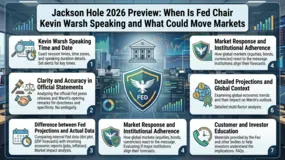
Fed Chair Kevin Warsh is listed to deliver Jackson Hole keynote remarks on 28 August 2026. See the schedule, market scenarios and USD-gold watchlist.

UK retail sales fell 0.5% in July 2026, while the three-month measure rose 1.1%. See the ONS details and what the mixed result may mean for GBP.
WikiFXWikiFXWikiFXWikiFXWikiFXWikiFXWikiFXWikiFXWikiFXWikiFX