
WikiFX Officially Launches the “Every Review Counts” Broker Review Initiative!
In forex trading, what truly determines risk is often not market volatility itself, but whether information is authentic, transparent, and fully visible.
简体中文
繁體中文
English
Pусский
日本語
ภาษาไทย
Tiếng Việt
Bahasa Indonesia
Español
हिन्दी
Filippiiniläinen
Français
Deutsch
Português
Türkçe
한국어
العربية
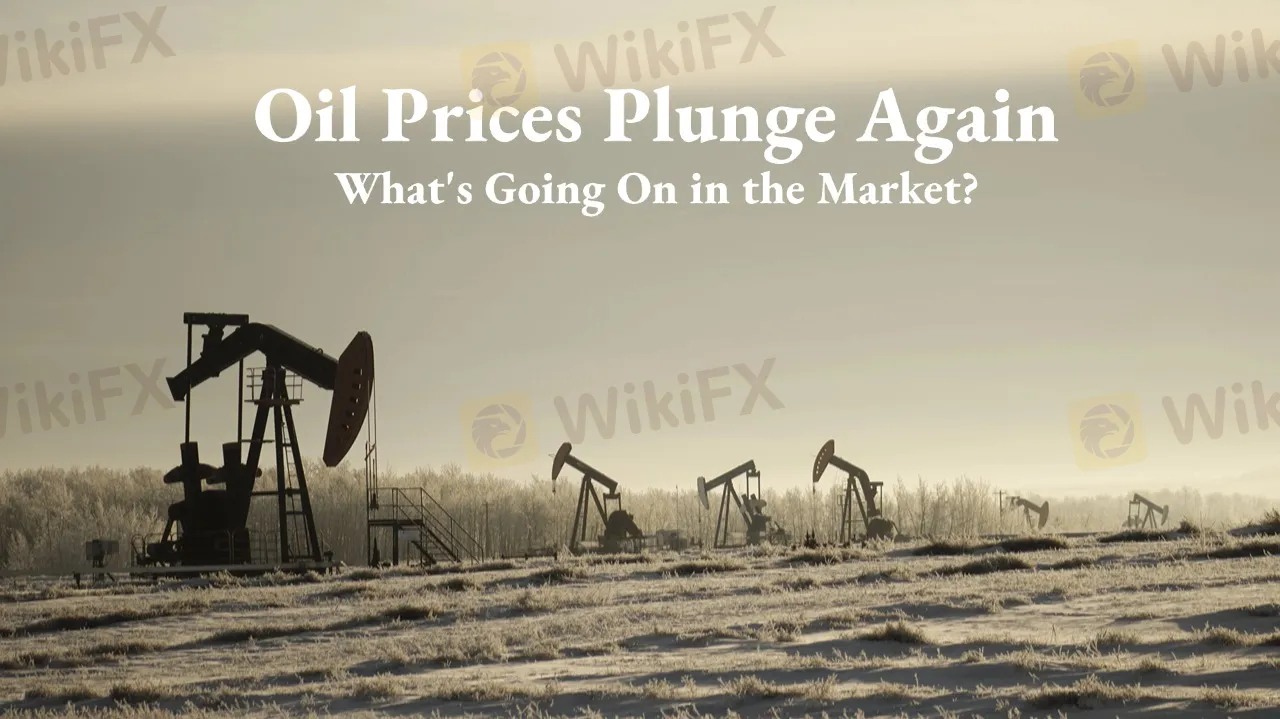
Abstract:Prices tumble to a 4-year low, shaking investor confidence. What’s next for the market?

In early Asian trading on Wednesday, oil prices took another sharp dive. Brent crude for June delivery fell to $60.46 per barrel, while WTI crude slipped below $57 — the lowest level in over four years.
Although prices saw a brief pause the previous day, renewed geopolitical tensions quickly erased any recovery hopes, sending oil back into decline. Despite a slight drop in U.S. crude inventories, this wasnt enough to offset the broader wave of pessimism in the market.
The primary driver behind this plunge is mounting concern over the global economy. As trade frictions between major economies escalate, investors are increasingly worried about long-term demand for oil. Uncertainty around Asias energy consumption is amplifying risk-off sentiment.
Meanwhile, although U.S. oil stockpiles fell slightly, several weeks of inventory build-up had already raised red flags about weakening demand — adding more pressure to the downside.
Looking forward, the oil market remains volatile and full of unknowns. Prices could face further turbulence depending on how global trade dynamics unfold and how energy demand shifts across key economies.
With fears of slowing growth intensifying, the risk-averse tone may persist in the oil space. For investors, this is not the time to chase the dip blindly. Instead, carefully assessing exposure and staying flexible with strategy will be key to navigating whats next.

Disclaimer:
The views in this article only represent the author's personal views, and do not constitute investment advice on this platform. This platform does not guarantee the accuracy, completeness and timeliness of the information in the article, and will not be liable for any loss caused by the use of or reliance on the information in the article.

In forex trading, what truly determines risk is often not market volatility itself, but whether information is authentic, transparent, and fully visible.

Share Your Expertise on What’s Moving the Market.

Strong retail participation in 2026 is driving forex and CFD trading volumes higher, as investors expand beyond equities into macro-sensitive markets.

In a forex market where fundamental and technical factors impact the currency pair prices, volatility is expected. If the price volatility acts against the speculation made by traders, it can result in significant losses for them. This is where a stop-loss order comes to their rescue. It is one of the vital investment risk management tools that traders can use to limit potential downside as markets get volatile. Read on as we share its definition and several strategies you should consider to remain calm even as markets go crazy.