Abstract:ASIC sues HSBC Australia for failing to prevent, detect, and resolve $23M in unauthorized transactions, leaving scammed customers stranded for months.
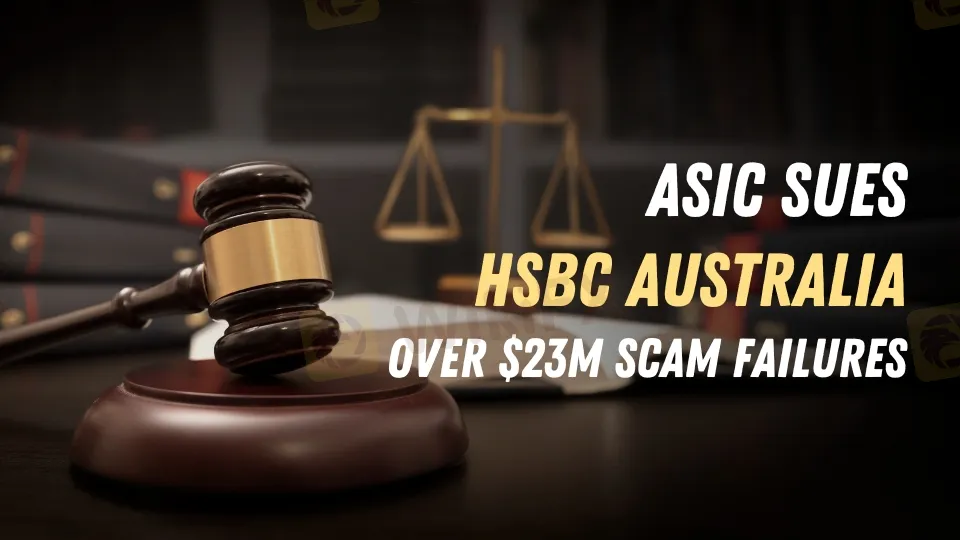
The Australian Securities and Investments Commission (ASIC) has launched a lawsuit against HSBC Bank Australia Limited (HSBC Australia) for failing to appropriately safeguard clients who were duped out of millions of dollars. ASIC accuses HSBC of systematic flaws in its fraud controls and investigative systems, which left victims susceptible and resulted in lengthy delays in investigating unlawful transactions.
 Contents
Key Failures Identified
ASIC found that HSBC Australia failed to:
- Implement effective fraud controls to prevent and identify unlawful payments.
- Investigate customer claims of unlawful transactions within the specified timeframe.
- Customers who have been affected should have access to financial services restored quickly.
ASIC says that these errors violated duties under Australia's Corporations Act 2001 and the National Consumer Credit Protection Act 2009.
Massive Losses to Scammers
Between January 2020 and August 2024, HSBC Australia received roughly 950 reports of fraudulent transactions, resulting in customer losses of AU$23 million. Alarmingly, approximately AU$16 million of these losses happened in only six months, from October 2023 to March 2024.

The increase in instances apparently began in mid-2023, when scammers impersonated HSBC employees to obtain access to user accounts. Despite mounting evidence, HSBC reportedly failed to create adequate mechanisms to detect or address massive fraud.
ASIC Deputy Chair Speaks Out
ASIC Deputy Chair Sarah Court emphasized the seriousness of the allegations, stating:
“We allege HSBC Australias failings were widespread and systemic, and the bank failed to protect its customers. From at least January 2023, HSBC was aware of fraud risks and gaps in their controls but did not take appropriate action. Some customers were scammed out of $90,000 or more.”
The court further criticized the bank for significant delays in resolving customer issues:
“HSBC compounded the problem by taking, on average, 145 days to investigate scam reports. Additionally, they delayed restoring customers bank account access, which took an average of 95 days. In one case, a customer waited 542 days to regain full access.”
Scammers Are Relentless
The court emphasized the critical necessity for institutions to act quickly and effectively against fraud, adding that scammers do not discriminate. People might lose their whole life savings in an instant. Banks must do more to safeguard their consumers. Where they fail, we will take legal measures to hold them responsible.
Final Thoughts
The action against HSBC Australia highlights the rising threat of scams and the essential role that financial institutions play in protecting their consumers. With fraudsters using increasingly complex strategies, banks must boost their fraud detection systems and increase reaction times. The alleged shortcomings of HSBC Australia reveal systemic flaws while also serving as a warning to the financial sector as a whole. Customers need proactive protection, and ASIC's actions demonstrate a clear commitment to holding banks accountable when they fall short.