She Thought She Found Love. Instead, She Lost 1.5 Million Baht and a Luxury Sports Car.
He Claimed Elite Connections. She Ended Up Losing Millions and Her Dream Car
简体中文
繁體中文
English
Pусский
日本語
ภาษาไทย
Tiếng Việt
Bahasa Indonesia
Español
हिन्दी
Filippiiniläinen
Français
Deutsch
Português
Türkçe
한국어
العربية
اردو
Abstract:Guy Flintham, a resident of Blackburn, has pleaded guilty to orchestrating a £19 million fraudulent investment scheme, deceiving 240 investors, and falsifying documents.
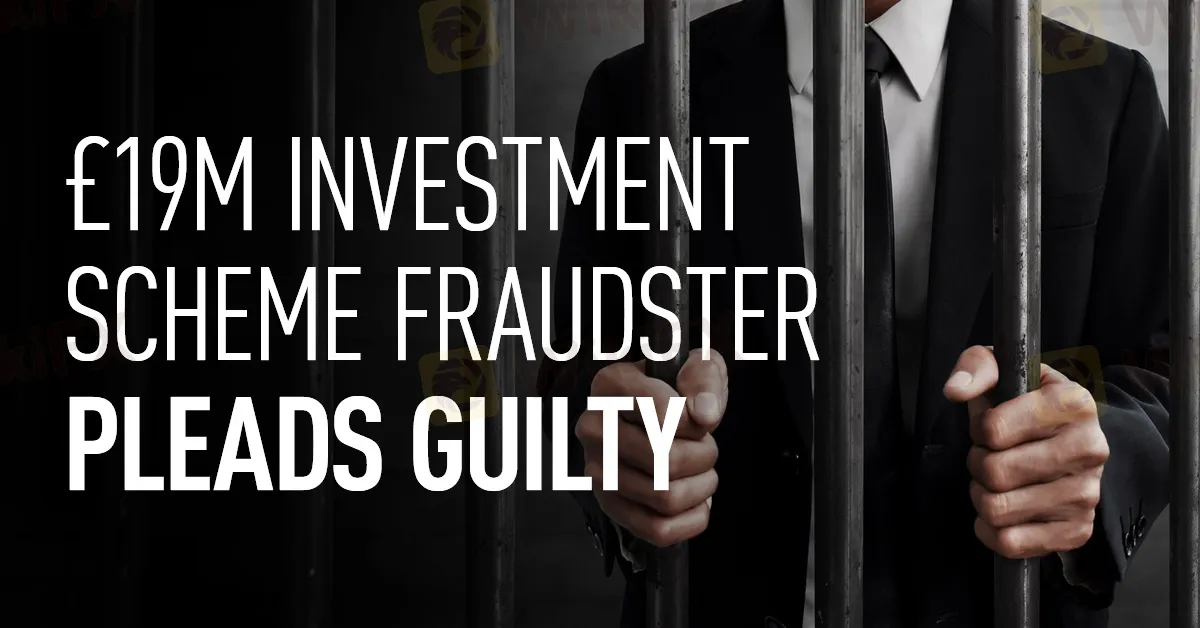
Guy Flintham, a resident of Blackburn, Lancashire, is set to face sentencing on April 26 for orchestrating a fraudulent investment scheme that resulted in the defrauding of approximately 240 investors, amounting to £19 million. The Financial Conduct Authority (FCA) has revealed that Flintham engaged in deceptive practices between January 2016 and November 2021, making false representations to entice investors into his scheme.
Flintham's fraudulent activities extended to the dissemination of misleading information regarding the operation of the investment scheme and the potential profits investors could expect. The FCA further highlighted that he went to the extent of falsifying documents to substantiate his deceptive claims.
The sentencing, scheduled for April 26, will determine the legal consequences for Flintham, who currently faces charges related to financial fraud. His actions have not only resulted in financial losses for the affected investors but have also raised concerns about the need for vigilant oversight and regulation in the financial services sector.

The legal proceedings against Flintham include a count of carrying on regulated activity without the necessary authorization or exemption, as outlined in the Financial Services and Markets Act 2000. This charge, if proven, could lead to fines and a potential prison sentence of up to two years.
It is noteworthy that during the legal proceedings, Flintham pleaded not guilty to the charge of carrying on regulated activity without proper authorization. The trial has been ongoing, with the accused's earlier appearance at Westminster Magistrates Court on January 22. At that time, Flintham refrained from indicating a plea for the fraud offense, but he maintained his plea of not guilty for the carrying on regulated activities charge.
Fraud by false representation, as seen in this case, is considered a serious financial offense and carries significant penalties. If convicted, Flintham may face substantial fines and a maximum prison term of 10 years. The severity of the charges underscores the importance of robust regulatory measures to safeguard investors and maintain the integrity of financial markets.
The case serves as a stark reminder of the potential risks investors face in an environment where fraudulent schemes can undermine trust and financial security. It highlights the ongoing need for regulatory bodies, such as the FCA, to remain vigilant in identifying and prosecuting individuals engaged in financial misconduct, thereby upholding the principles of transparency, accountability, and investor protection.


Disclaimer:
The views in this article only represent the author's personal views, and do not constitute investment advice on this platform. This platform does not guarantee the accuracy, completeness and timeliness of the information in the article, and will not be liable for any loss caused by the use of or reliance on the information in the article.

He Claimed Elite Connections. She Ended Up Losing Millions and Her Dream Car

Octa vs XTB Showdown: One Is Banned By The RBI, The Other Has 24 Years Of Stock-Market Pedigree — Which Should Indian Traders Actually Trust In 2026? If you are an Indian trader who has done even a casual Google search for forex brokers, two names will have crossed your screen — Octa (formerly OctaFX) and XTB. Both are widely advertised, both have massive global followings, and both claim to offer competitive trading conditions for retail traders. But these two brokers could not be more different in their philosophy, regulation, and legal standing in India. Octa is a mobile-first, high-leverage, beginner-friendly offshore broker that has rapidly grown across emerging markets — including, controversially, India. XTB is a 24-year-old publicly-listed European broker with deep Tier-1 regulation that has specifically chosen NOT to accept Indian clients in 2026. Yes, you read that right. XTB does not accept Indian residents. And Octa, the one that does serve Indian residents, has been adde

Walk into any forex marketing pitch in India in 2026 and the first claim you will hear is some variation of "we are regulated by multiple international authorities". The implication is obvious — multiple regulators equals safer brokers. But after WikiFX has documented thousands of complaint cases from Indian and other South Asian traders, one inconvenient truth has become impossible to ignore: Not all regulatory licences are equal. Not even close. A broker can claim "regulated by 5 authorities" — and if those 5 authorities are all offshore-tier (MISA, Vanuatu, Seychelles, Saint Lucia, Comoros), it offers approximately the same protection as no regulation at all. Meanwhile, a single FCA or ASIC licence carries more practical investor protection than a dozen offshore registrations stacked together. This is the WikiFX 2026 ranking of forex brokers by genuine regulatory credibility — measured not by quantity of licences, but by the strength and enforcement weight of the regulators behind

Live from Wealth Expo Colombia 2026: WikiFX Strengthens Growing Partnerships Across LATAM