Abstract:"Money game" is another word for get-rich-quick schemes in which the operators trade in foreign currencies with money received from "investors."
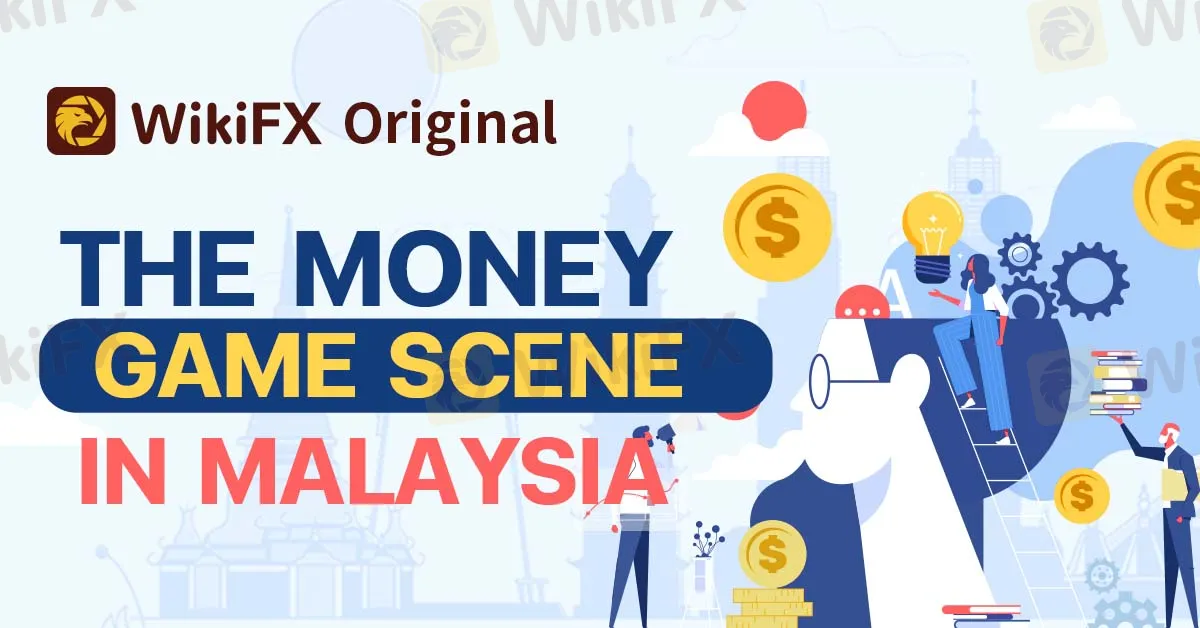
Many individuals are tempted by the lucrative returns, and sometimes even “guaranteed”, which may reach as high as (or more) 10% per month passively when compared to the lacklustre gains from equities and fixed deposits in the face of surging inflation, which has raised the cost of living to new highs.
If left unchecked, this situation might have severe ramifications for the “players” in the game and the financial market.
Forex trading programmes became popular in 2015, initially in Penang and then throughout Malaysia. That's when the money game craze developed into a frenzy with downline recruitment.
The operators said they intended to help people and hosted seminars in several areas to convey their “sure-win” forex trading approach to the public.
Concerns about these schemes were frequently expressed in the mainstream media until early 2017, prompting authorities to increase their oversight as the money game bubbles rose dramatically.
Why do people invest in such schemes when they know they risk losing their hard-earned money?
Like a pyramid scheme, a money game pays a monthly referral fee to investors who secure a downline. The bigger the number of downlines you have, the higher the referral fee.
Furthermore, some get-rich-quick schemes have begun to enter the cryptocurrency space, with profits distributed in the form of cryptocurrencies.
The Securities Commission Malaysia regularly updates its alert list, warning the public about regulated activities performed without a license, such as dealing in securities, derivatives, fund management, and private retirement schemes; advising on corporate finance; and providing investment advice. Unfortunately, people are still drawn to get-rich-quick schemes as they disregard these constant warnings and reminders from the authorities.
Bank Negara advises the public to deal exclusively with licenced onshore banks and to seek clarification from the relevant authorities if they are unsure.
Illegal money games or investment schemes often refer to various illegal operations that offer investments with long-term rewards. According to Bank Negara, IDT happens when a fraudster promises the victim an investment opportunity and collects deposits with the promise of returns within a specified period, after which the principal amount of the investment will be reimbursed. The offer violates Section 137 of the Financial Services Act of 2013.
Meanwhile, an IFT is a purchase or sale of foreign currency in Malaysia by an individual or a company with anyone who is not a licenced onshore bank or has not obtained Bank Negara's approval under the Financial Services Act 2013 or the Islamic Financial Services Act 2013.
However, as long as there is greed and a thirst for high-risk investments, these forex trading operators will have the opportunity to extend their network. At the end of the day, it is up to the person whether or not to take the risk.
If you as an individual has ever been approached by a someone to open a forex account with overly handsome profit promises that seem too good to be true, always look up the broker in question. To do this easily, download the free WikiFX mobile application from Google App or App Store wherein you can get access to the profiles of over 40,000 brokers globally at your fingertips.


Avoid brokers that have a WikiScore that is lower than 6.0 and that operates without any valid licenses. No matter what the other party is promising you, there is a fishy reason behind for its lack of regulatory status and its underlying risk.

Dont ever take due diligence lightly as it may result in expensive regrets.