World Cup Fever Is Here! Choose your broker like you choose your team
Join WikiFX and investors worldwide in celebrating the excitement of the 2026 FIFA World Cup!
简体中文
繁體中文
English
Pусский
日本語
ภาษาไทย
Tiếng Việt
Bahasa Indonesia
Español
हिन्दी
Filippiiniläinen
Français
Deutsch
Português
Türkçe
한국어
العربية
اردو
Abstract: India’s strong growth offers room for the Reserve Bank of India to raise rates by another 60 basis points as the central bank seeks to stamp out high inflation, DBS Group Research said in a note on Thursday.
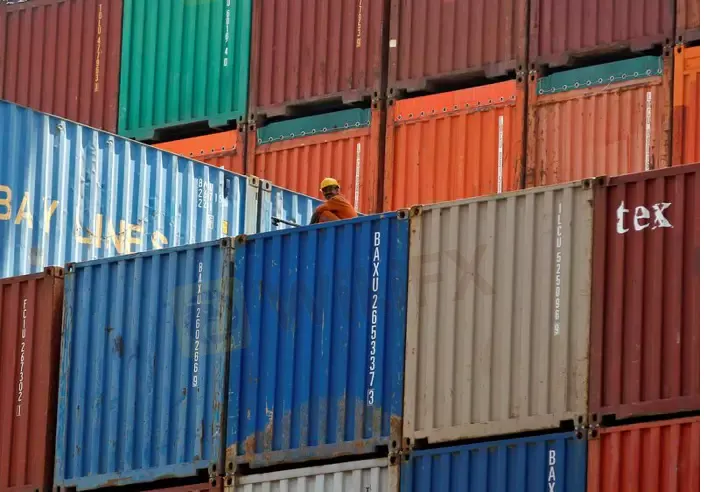
Favourable base effect after the onset of Delta coronavirus variant last year will additionally lift the year-on-year GDP numbers, Radhika Rao, senior economist at DBS Group Research, wrote in the note.
“Resumption in service sector activity added to the momentum, besides manufacturing,” Rao said. The research houses fiscal year 2022-2023 GDP growth forecast of 7% year-on-year will see India emerge the fastest-growing economy in Asia this year, she pointed out.
Broad-based improvement in vaccination rates and relaxation of lockdowns benefited urban consumption, while unemployment rates returned to pre-pandemic levels, Rao said. On the investment side, “lead indicators have been encouraging.”
“Resilient growth provides the room for RBI to prioritise inflation,” she said. She expects RBI to raise rates by another 60 bps in the current fiscal year, adding to the 140 bps already done.
India‘s retail inflation rate has remained above RBI’s upper tolerance limit for seven straight months.
“Our call is for a 35 basis points hike in September, followed by another 25 basis points in December to take the repo rate to 6.0%, before settling into an extended pause.”


Disclaimer:
The views in this article only represent the author's personal views, and do not constitute investment advice on this platform. This platform does not guarantee the accuracy, completeness and timeliness of the information in the article, and will not be liable for any loss caused by the use of or reliance on the information in the article.

Join WikiFX and investors worldwide in celebrating the excitement of the 2026 FIFA World Cup!

Indian stock markets witnessed a sharp low in the early trading hours on Monday. While the Sensex fell by more than 600 points, Nifty slumped under 23,200. The fall in the stock market today is the investors’ reaction to the escalating tensions in the Middle East, a surge in crude oil prices and weakness across markets worldwide. At around 9:30 a.m. on June 8, 2026, the BSE Sensex dropped by 627.47 points to 73,615.87, recording a fall of 0.85%. At the same time, the Nifty declined by 195.40 points to 23,171.30, registering a 0.84% fall. The selloff was broad based, with most sectoral indices slipping into red. Nifty IT, Nifty Realty, Nifty Auto and Nifty Metal slipped by 1.61%, 1.68%, 1.21% and 1.31%, respectively. Even the Nifty Midcap 100 and Nifty Smallcap 100 declined by 0.73% and 0.63%, respectively. As far as Sensex stocks are concerned, only State Bank of India, Axis Bank, Power Grid Corporation of India and Sun Pharmaceutical Industries were found to be green. Among the one

Have you experienced issues with Pepperstone deposit & withdrawal processing? From your experience, do you feel that the Australia-based forex broker causes losses to its clients? Did the brokerage entity freeze your account and give you a margin call? All these trading allegations have been rampant on broker review platforms such as WikiFX. This Pepperstone review article takes a close look at the user complaints, especially in 2026. Additionally, we have given an overview of the regulatory framework under which the brokerage entity operates.

Some broker comparisons end with a confident "go with this one." This is not one of them — and that honesty is exactly what makes it worth reading. Wundersys and tradgrip are two young, offshore-registered brokers that keep popping up in front of beginner traders, often through aggressive online marketing. Both promise the usual buffet: tight spreads, generous leverage, multiple account tiers. And both, according to WikiFX, sit near the very bottom of the safety scale. So instead of crowning a champion, this comparison is really about something more useful: learning to read the warning signs, understanding the small differences that still matter, and knowing why "the better of two risky options" is still a conversation about risk.