Điểm
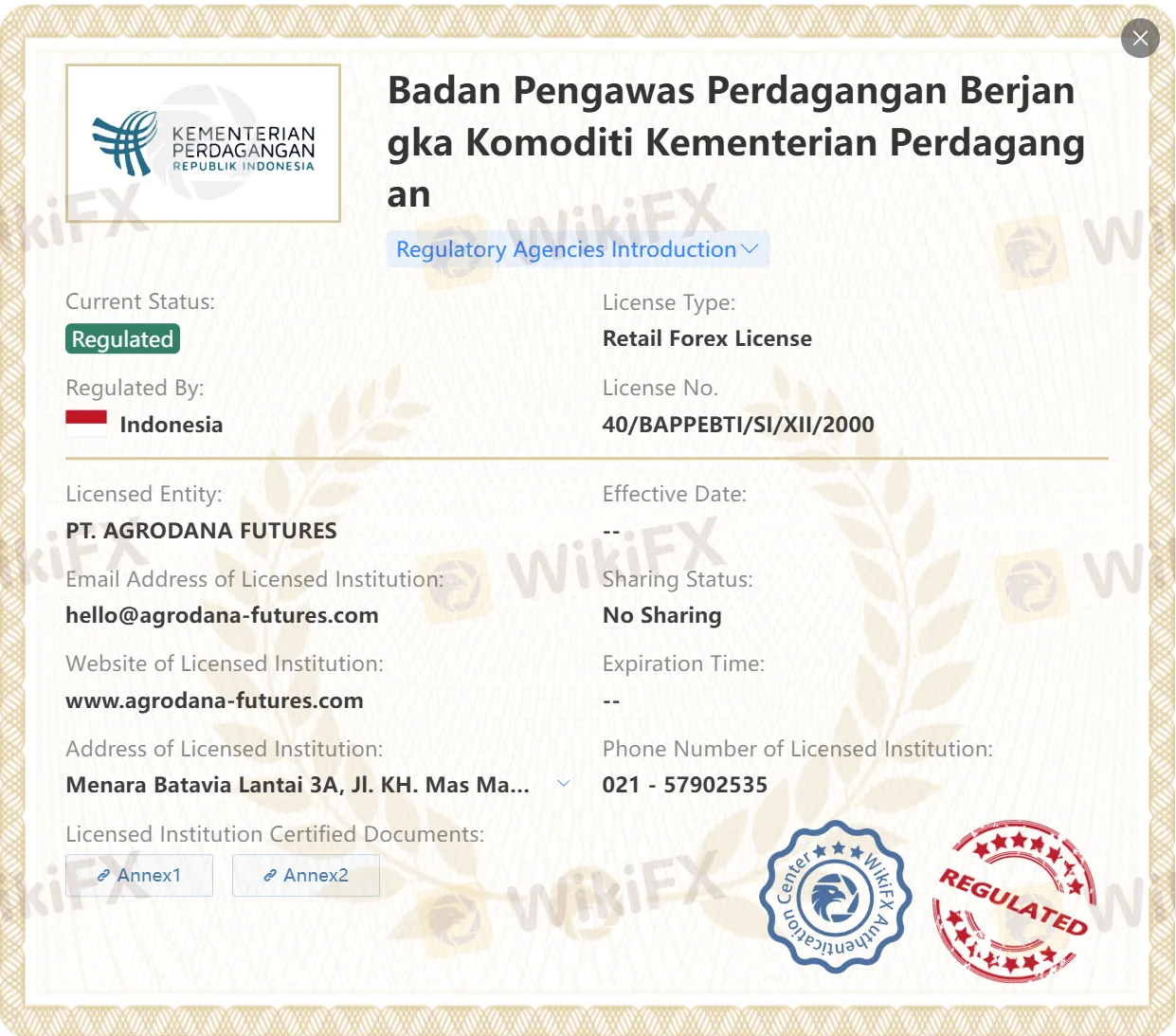
AGRODANA FUTURES
https://agrodana-futures.com/
Website
Chỉ số đánh giá
Nhận dạng MT4/5
MT4/5
Chính thức
Agrodana-Demo
Mức ảnh hưởng
C
Mức ảnh hưởng NO.1
Nhận dạng MT4/5
Nhận dạng MT4/5
Chính thức
Mức ảnh hưởng
Mức ảnh hưởng
C
Mức ảnh hưởng NO.1
Liên hệ
Cơ quan quản lý Forex 3
Đơn lõi
1G
40G
1M*ADSL
Thông tin tài khoản
- Điều kiện giao dịch--
- Currency--
- Đòn bẩy tối đa1:100
- Hỗ trợEA
- Tiền nạp tối thiểu500.000 Rp
- Spread tối thiểutừ 0
- Phương thức nạp tiền--
- Phương thức rút tiền--
- Mức giao dịch tối thiểu0.1
- Phí hoa hồng$2.5
- Sản phẩm giao dịchNgoại hối, Hàng hóa
Các nhà giao dịch MT4/5 chính thức sẽ có dịch vụ hệ thống âm thanh và hỗ trợ kỹ thuật tiếp theo. Nhìn chung, hoạt động kinh doanh và công nghệ của họ tương đối hoàn thiện và khả năng kiểm soát rủi ro của họ rất mạnh
Người dùng đã xem AGRODANA FUTURES cũng đã xem..
STARTRADER
XM
GTCFX
TMGM
Website
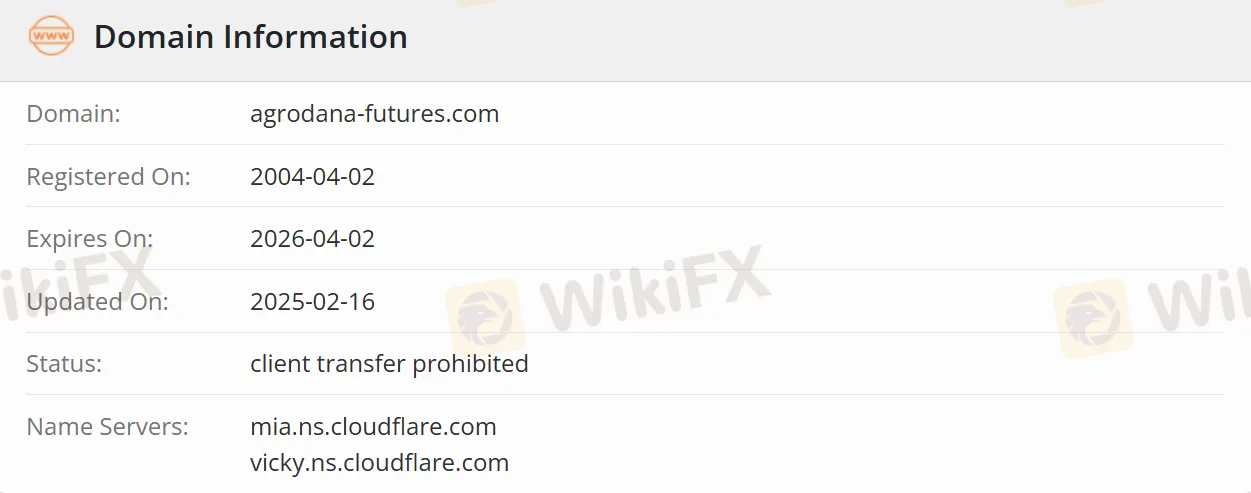
agrodana-futures.com
172.67.174.88Vị trí ServerHoa Kỳ
Số lưu hồ sơ--Quốc gia/khu vực phổ biếnIndonesia

Thời gian thành lập tên miền2004-04-02WebsiteWHOIS.PUBLICDOMAINREGISTRY.COMCông tyPDR LTD. D/B/A PUBLICDOMAINREGISTRY.COM
Sơ đồ quan hệ
Các công ty liên quan
Hỏi & Đáp về Wiki
Is a demo account available for free from Agrodana Futures, and if so, are there any restrictions such as an expiration period?

In my experience with Agrodana Futures, I found that while the platform offers a demo option within their MT4 and MT5 environments, the information available does not clearly state if the demo account is universally free or if any time restrictions apply. Personally, I view the availability of a demo account as a significant advantage for risk management and skill development, especially for newer traders. However, given Agrodana’s focus on compliance and transparency due to their BAPPEBTI regulation, I expect that demo environments typically mirror the functionalities of standard accounts, possibly with expiration periods similar to those seen in other regulated brokers. When I evaluated the account options and platform accessibility, it's clear that Agrodana supports both MetaTrader 4 and MetaTrader 5 for Indonesian users and allows for the use of demo environments (“Agrodana-Demo” server listed). Still, there is no explicit mention in the official materials regarding unlimited or perpetual demo access. In my approach to account opening, I would clarify these terms directly with customer service before committing to any deposit, given that trading conditions and demo expirations can impact the learning curve or strategy testing over the longer term. For me, caution and full understanding of such terms are essential before relying on a platform for trading education or practice.
Could you break down what the total trading costs are for indices such as the US100 when trading with Agrodana Futures?
Having traded with a range of regional brokers over the years, I approach cost structures with extra care—especially with indices like the US100 at Agrodana Futures. From my experience and research, Agrodana charges both spreads and commissions, and for a product like the US100 (traded as a CFD Index), these fees can combine to form the core of your costs. For the relevant SPA accounts (Mini SPA or Regular SPA), you’re looking at a spread from 3 pips in the Mini SPA or 1 pip in the Regular SPA. On top of that, there’s a commission per trade: $5 per trade for Mini SPA or $50 per trade for Regular SPA accounts. It’s important to note that for US equities CFDs, a 0.25% commission is also mentioned, but this does not typically apply to indices like the US100. Why does this matter practically? Spreads on indices can be narrow compared to some exotics, but commissions add a fixed cost regardless of your trade's size, so frequent trading or high volume can substantially increase expenses. Although Agrodana lists free swaps for some SPA accounts—at least during certain promotions—I never rely on temporary offers when calculating my ongoing costs. In summary, when trading US100 at Agrodana Futures, my total costs come from the spread (starting at 1 or 3 pips depending on account type) plus the per-trade commission. I make sure to check these directly with the broker’s support, as fee structures can be complex or subject to change. For me, verifying every element before trading is crucial, as costs are a direct drag on my net performance.
Are there any inactivity charges with Agrodana Futures, and what specific terms apply if such fees exist?
As someone who takes account fees seriously, particularly with regard to inactivity, I took a close look at Agrodana Futures and combed through their available details about fees and trading terms. From what I have found in my review, there is no explicit mention of inactivity fees or charges levied on dormant accounts in the provided documentation. This absence of a clearly stated inactivity fee policy offers some peace of mind; in my experience, brokers with hidden or unclear fee structures around inactive accounts can present unnecessary risks, especially to retail traders who may step away from the market periodically. That said, I always urge caution—terms and conditions can change and sometimes aren't prominently disclosed in marketing overviews or summaries. As a rule of prudent trading, I make it a point to review a broker's account agreement or consult their customer service directly before opening an account, especially if I expect there may be periods without trading activity. While Agrodana Futures demonstrates transparency and strong regulatory status otherwise, for me, explicit clarification about inactivity terms would be an important final step to ensure there are no unforeseen charges for leaving an account idle. As always, understanding every aspect of a broker’s fee policy remains key to managing trading costs responsibly.
Does Agrodana Futures offer fixed or variable spreads, and how do these spreads typically behave during periods of high market volatility or major news releases?
From my experience trading with Agrodana Futures, their spreads are generally variable rather than fixed. The specific information I encountered shows that spreads on major forex pairs can start from as low as 0 pips or 0.3 pips, depending on the account type and instrument. In practical terms, this means the spread you’re quoted isn’t constant—it can contract or widen depending on market conditions. During routine, low-volatility periods, spreads tend to stay close to their minimums, especially on liquid forex pairs like EUR/USD. However, whenever there’s heightened volatility—such as during unexpected economic news releases or geopolitical events—I’ve observed that spreads can widen considerably. This behavior is typical even among regulated brokers, and it’s something to be cautious about. Variable spreads can protect the broker in illiquid moments but may result in greater trading costs for clients if you’re not careful about timing your entries and exits. The reasoning behind this is straightforward: when the market becomes erratic, liquidity providers raise their own spreads to manage risk and brokers must pass these changes on. So, while Agrodana Futures offers attractive minimum spreads under normal conditions, anyone trading around news events or in fast markets should expect wider spreads and plan their risk accordingly. As always, managing position sizes and avoiding overleveraging during such times is crucial.

Nội dung bình luận
Vui lòng nhập...


Chrome
Chrome extension
Yêu cầu về quy định của nhà môi giới ngoại hối toàn cầu
Đánh giá nhanh chóng website của các sàn giao dịch

Tải ngay