Abstract:Time is precious, more so in forex trading, where a millisecond delay can either make your winning position turn into a regretful loss or cut short your profit so much that it feels like a loss. While going through numerous user reviews, we often come across the disappointing experiences of slippage draining out their profits due to slow trade order execution. In this article, we have elaborated on low latency, its impact on your trading experience, a host of factors that determine it, etc.
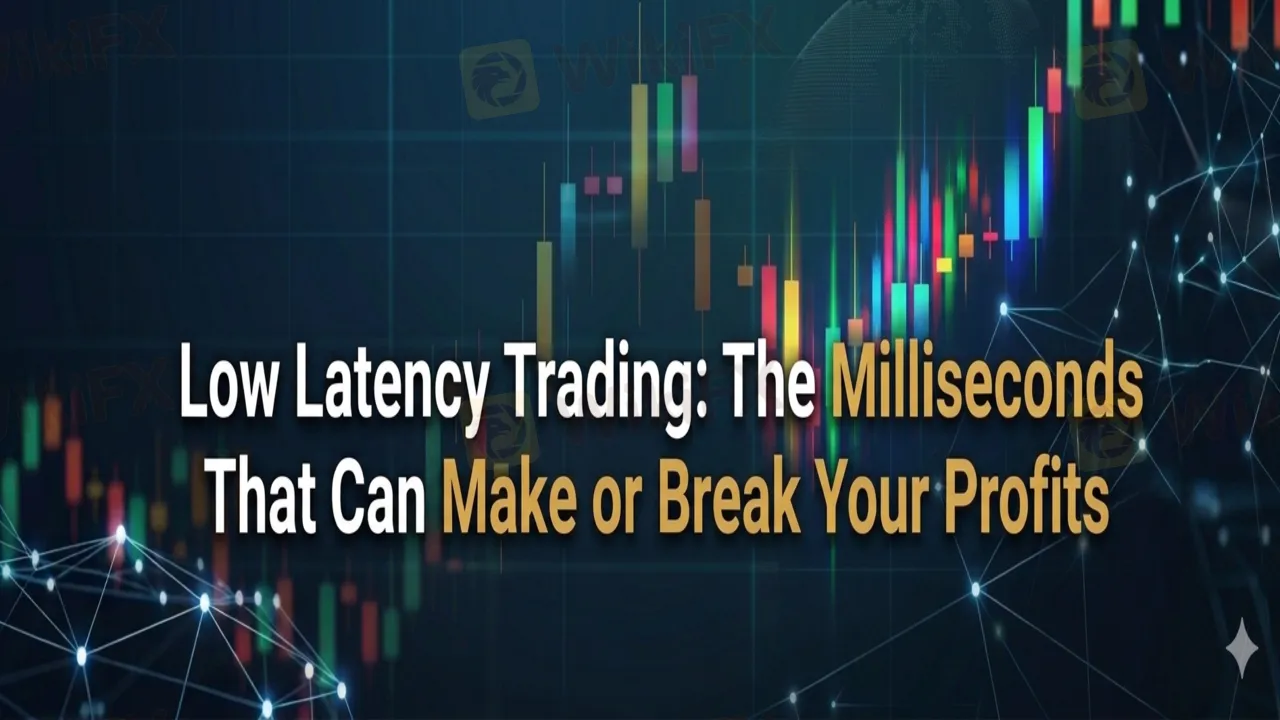
Time is precious, more so in forex trading, where a millisecond delay can either make your winning position turn into a regretful loss or cut short your profit so much that it feels like a loss. While going through numerous user reviews, we often come across the disappointing experiences of slippage draining out their profits due to slow trade order execution. In this article, we have elaborated on low latency, its impact on your trading experience, a host of factors that determine it, etc.
 Contents
What is Low-Latency Trading?
Low-latency trading is about executing trades with minimum delay, typically within milliseconds. The time here begins from the initiation of a trading move to its ultimate execution on the exchange. To thrive in a competitive financial market, it is important to have a rapid trade execution. In its absence, you can miss opportunities or witness unfavorable prices through the not-so-called-for phenomenon, i.e., slippage.
Latency is thus defined as the difference between order placement by the trader and the order execution by the brokerage firm. It applies to both buy and sell transactions on the exchange. Your trade execution speeds will be immense with low latency.
Should You Look for an Ultra-Low-Latency Trading Experience?
You will only benefit more from this phenomenon. Here, a trade order is processed, transmitted and executed within a trading system in microseconds. The degree of precision turns out to be the real difference between low-latency trading and ultra low-latency trading. Low-latency trading emphasizes minimizing delays to milliseconds. Conversely, ultra-low-latency trading goes a step further by executing trades in microseconds or low single-digit milliseconds.
The Impact of Low-Latency on Your Trading
The benefits of low-latency trading include faster trade execution, improved market opportunities and quality. These benefits have been elaborated below.
Reduced Slippage Due to Faster Trade Order
Low latency reduces the delay between order placement and its execution, reducing the scope for slippage. This enables highly precise trade entries and exits, which is highly appreciated in fast-moving markets such as forex.
Better Arbitrage and Market Opportunities
Your trading system can quickly spot and react to price discrepancies across different exchanges with low latency. Such a fast response allows immense profitable arbitrage avenues that usually leave within milliseconds. This thus puts you in a better position than traders mired with slower trade executions.
Improved Market Liquidity and Stability
Enabling faster order book updates, low latency ensures tighter spreads and greater liquidity. As a result, the short-term market volatility makes way for a more efficient trading environment for all the participants.
You Cant Have Any Better Option in High-Frequency Trading
Even a microsecond difference in latency can result in substantial financial benefits for traders in ultra-competitive markets. With an ultra-low-latency network, you can quickly leverage fleeting market signals to boost your profitability and maintain a competitive edge.
Factors That Influence Your Trading Latency
This is an important aspect of low-latency trading that warrants careful consideration from traders. Key factors that affect trading latency include network quality, physical distance to servers, optimized hardware/software, colocation benefits, and broker execution pace. The factors are explained in greater detail below.
Physical Distance to Broker Servers
The most crucial factor affecting the trading latency is the physical distance your trading system has from your brokers servers. While data signals spread at the speed of light, they are decelerated by the actual path taken through fibre optic cables that hardly follow a straight line. So, even a few hundred kilometres can lead to several delays ranging from microseconds to milliseconds, denying you an outright chance to pocket huge profits. A huge distance can also lead to losses, particularly in an adverse market scenario.
Network Infrastructure and Connectivity
The quality and type of network infrastructure linking you with the exchange or broker significantly impact trading latency. Dedicated fibre optic links assure stable and low-latency transmission. Advanced technologies, such as microwave or radio frequency links, meanwhile, can ensure quick data transfer by opting for more direct line-of-sight routes. Improved routing protocols and minimized network hops also decrease delays.
Colocation and Proximity Hosting
The colocation of trading servers inside or in proximity to the exchanges data center drastically minimizes latency by removing a lot of physical distance and network congestion. Such proximity enables your orders and market data to travel in microseconds, instead of milliseconds. You receive a distinct speed benefit, vital for high-frequency trading enterprises.
Hardware and Software Optimization
Optimized hardware, including high-performance CPUs, low-latency network cards and specialized devices such as FPGAs, can improve the data processing and order execution pace. At the same time, lightweight and nicely curated trading software decreases processing overhead, allowing your system to react instantly to market events without unnecessary delays.
Execution Quality of Your Broker
The internal order handling systems and execution speeds offered by the broker also influence trading latency. Brokers with direct market access (DMA) offers eliminate the scope for intermediaries, allowing for faster execution. Moreover, the processing and filling of orders are dependent on the efficiency of your brokers matching engines.
Summing Up Low Latency Trading
Low-latency trading is an aspect that traders cannot ignore if they want to stay relevant in a high-frequency trading environment. Those eyeing scalping and arbitrage can also leverage a highly-optimized low-latency trading system. The execution speed improves drastically with reduced latency; however, its also important to maintain a disciplined trading plan and manage risks effectively. Technology is an important tool, without a doubt. However, your trading gains lie in your skill, expertise, and your ability to navigate the market through an informed decision-making process.
For more such trading insights, download the WikiFX app today.

Interesting Articles for You

Telegram Banned in India? Here's What Traders Must Do Next
Yes, it’s true! The Government of India decided to ban Telegram in the country on June 16, 2026, surprising many who rely on this platform for daily trading alerts & advisories. The ban has taken effect under Section 69A of the IT Act as part of the government’s plan to stop fraud during the NEET-UG re-examination. According to reports, fraudulent rackets were selling fake question papers for amounts ranging from INR 5,000 to 50,000.
But the ban, which will be effective until June 22, 2026, affects far more than students. It transcended from a messaging blockout to a sudden disengagement from the app that shaped many traders’ daily routine over time. Out of the 15 crore plus unique registered investors in India, a large chunk sought trading tips, market news, along with buy and sell signals on Telegram. It must have taken investors by surprise. But is the ban detrimental to traders, or is there something more than meets the eye?
News
2026-06-18
Further Reading