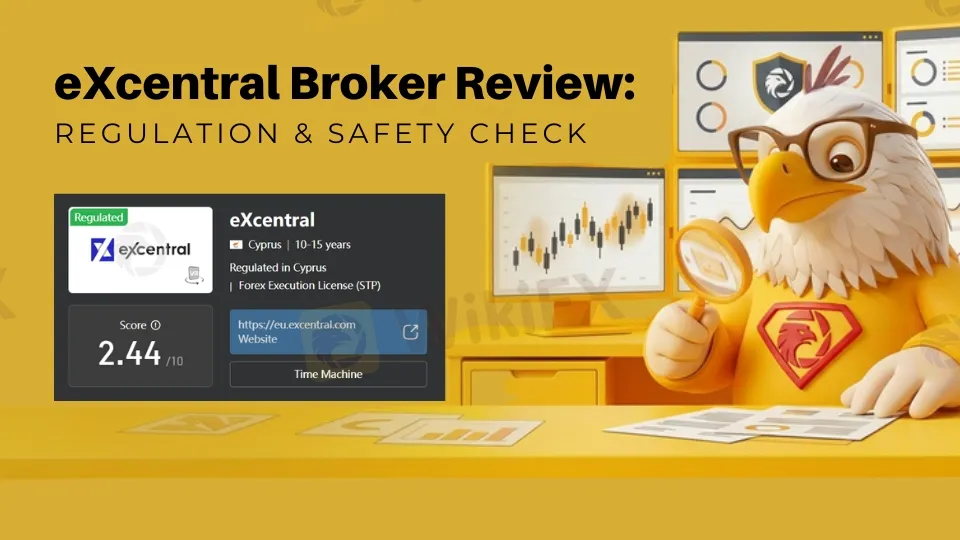
Abstract:Explore eXcentral regulation, risks, and trading features. Find out if this broker is safe before you invest—read the full review now.
 Contents
eXcentral Broker Review: Regulation, Safety, and Key Trading Insights
When evaluating any online trading platform, one of the first and most critical questions traders ask is about eXcentral regulation. Understanding whether a broker operates under a recognized financial authority is essential for assessing trust, security, and overall reliability.
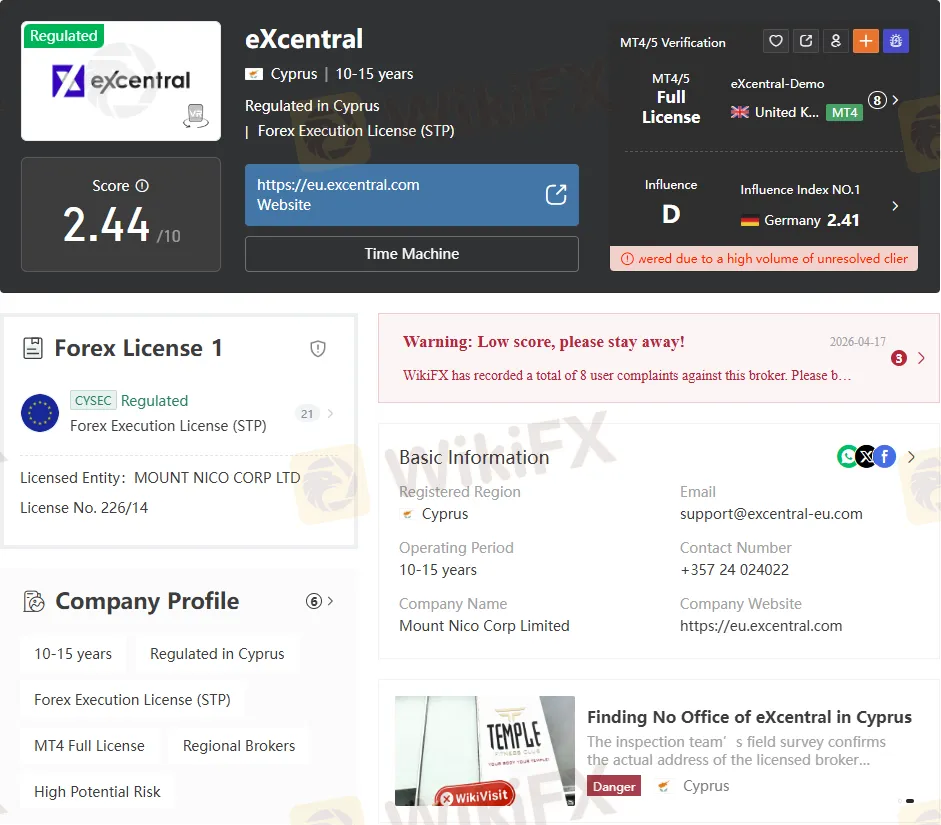
The eXcentral broker is a Forex and CFD trading provider that has attracted attention among retail traders. However, like many brokers in the market, its regulatory standing and risk profile require careful examination. According to available data from its WikiFX dealer page, the regulation eXcentral claims and its operational structure should be reviewed alongside independent risk indicators before making any trading decision.
This article provides a complete breakdown of the broker eXcentral, covering its regulatory status, potential risks, trading offerings, and account access—helping you make an informed decision based on verified information.
What is eXcentral, and How Does This Broker Operate?
The eXcentral broker operates as an online trading platform offering access to Forex and Contracts for Difference (CFDs). It is associated with Mount Nico Corp Ltd, a company reportedly based in Cyprus.
As a broker, eXcentral provides retail traders with access to global financial markets through leveraged trading. Its business model primarily revolves around CFD trading, where users speculate on price movements rather than owning the underlying assets.
From an operational standpoint:
- The broker offers both web-based and platform-based trading
- Services are targeted mainly at retail traders
- It functions as an intermediary between traders and market liquidity
Understanding this structure is important because it directly influences execution, pricing, and risk exposure.
Is eXcentral Regulated and Can Traders Trust Its License?
A key factor in assessing any broker is its licensing. The eXcentral regulation status is linked to authorization under the Cyprus Securities and Exchange Commission (CySEC), which is a recognized financial regulator within the European Economic Area.
Regulated brokers under CySEC are generally required to:
- Segregate client funds from company funds
- Follow transparency and reporting standards
- Provide investor protection mechanisms
However, based on third-party aggregator platforms such as WikiFX, regulatory information should always be cross-verified, as discrepancies or misuse of regulatory credentials can occur in the industry.
Therefore, while regulation eXcentral references may indicate a licensed entity, traders are advised to independently verify the license details directly with the regulator.
Are There Any Risks or Warning Signs Associated With eXcentral?
Beyond licensing, a complete evaluation must include potential risks. Independent sources, including broker monitoring platforms, have highlighted concerns that should not be ignored.
Among the commonly noted risk factors:
- Reports of “suspicious clone” warnings linked to regulatory claims
- User complaints related to withdrawals or service experience
- General high-risk nature of leveraged CFD trading
It is important to understand that even regulated brokers can carry risk, especially in high-volatility markets. Additionally, clone broker risks—where unauthorized entities imitate licensed firms—are a known issue in the Forex industry.
This makes due diligence essential when dealing with the broker eXcentral, particularly in verifying official domains and communication channels.
What Can You Trade on the eXcentral Forex Platform?
The eXcentral Forex offering includes access to multiple financial instruments through CFD trading. These typically include:
- Forex currency pairs
- Commodities (e.g., gold, oil)
- Indices
- Cryptocurrencies
- Stocks (via CFDs)
This multi-asset approach allows traders to diversify their strategies within a single platform. However, it is important to note that CFD trading involves speculation on price movements rather than ownership, which increases exposure to leverage-related risks.
For traders specifically searching for Forex eXcentral services, the platform positions itself as a multi-asset broker rather than a Forex-only provider.
What Are eXcentrals Account Types, Leverage, and Trading Conditions?
Trading conditions are a major factor in broker selection. eXcentral offers multiple account tiers, which may include:
- Entry-level accounts for beginners
- Mid-tier accounts with additional features
- Premium or VIP accounts with tighter spreads
Typical trading conditions reported include:
- Leverage up to 1:400 (depending on jurisdiction)
- Spreads starting from around 0.9 pips
- Variable trading costs depending on account level
Higher leverage can amplify both profits and losses, making it suitable primarily for experienced traders.
What Are the Fees, Costs, and Minimum Deposit at eXcentral?
Understanding cost structure is essential before opening an account. Based on available data:
- Minimum deposit: approximately $250
- Withdrawal fees: may apply depending on method
- Additional fees: potential inactivity or overnight (swap) charges
These financial requirements place eXcentral within the mid-range category of brokers in terms of entry barrier.
Traders should always review the latest fee schedule directly from the brokers official platform, as costs may change over time.
How Do You Register and Complete the eXcentral Login Process?
To begin trading, users must complete the registration and eXcentral login process. This typically involves:
- Creating an account via the official website
- Submitting identity verification (KYC requirements)
- Funding the account
- Accessing the trading platform through login credentials
The login eXcentral process is a standard step for account management, deposits, withdrawals, and trading activities.
Security best practices—such as using official links and enabling account protection—are strongly recommended.
Conclusion
The eXcentral broker presents itself as a regulated CFD trading provider with access to multiple financial markets. Its association with CySEC licensing suggests a level of regulatory oversight; however, independent sources highlight potential concerns, including clone warnings and user-reported issues.
From a broader perspective:
- The eXcentral regulation status requires independent verification
- The platform offers diverse trading instruments and competitive leverage
- Risks associated with CFDs and broker credibility must be carefully considered
Ultimately, choosing to trade with the broker eXcentral should be based on thorough research, risk tolerance, and direct verification of regulatory claims. Traders are strongly advised to validate all information through official regulatory bodies and ensure they fully understand the risks involved before committing funds.