

Global Broker Regulation Inquiry App
About WikiFX
English
简体中文
繁體中文
English
Pусский
日本語
ภาษาไทย
Tiếng Việt
Bahasa Indonesia
Español
हिन्दी
Filippiiniläinen
Français
Deutsch
Português
Türkçe
한국어
العربية
Analysis: The 'Liquidity Mirage' — Why Tight Spreads Are Masking Risk in Gold and FX
Abstract:Recent volatility in precious metals has exposed a deepening structural flaw in global financial markets, where bid-offer spreads have ceased to function as accurate risk premiums. A new analysis suggests that the decoupling of spread pricing from underlying liquidity risks is creating a "liquidity mirage" that leaves traders vulnerable to massive execution slippage during stress events.
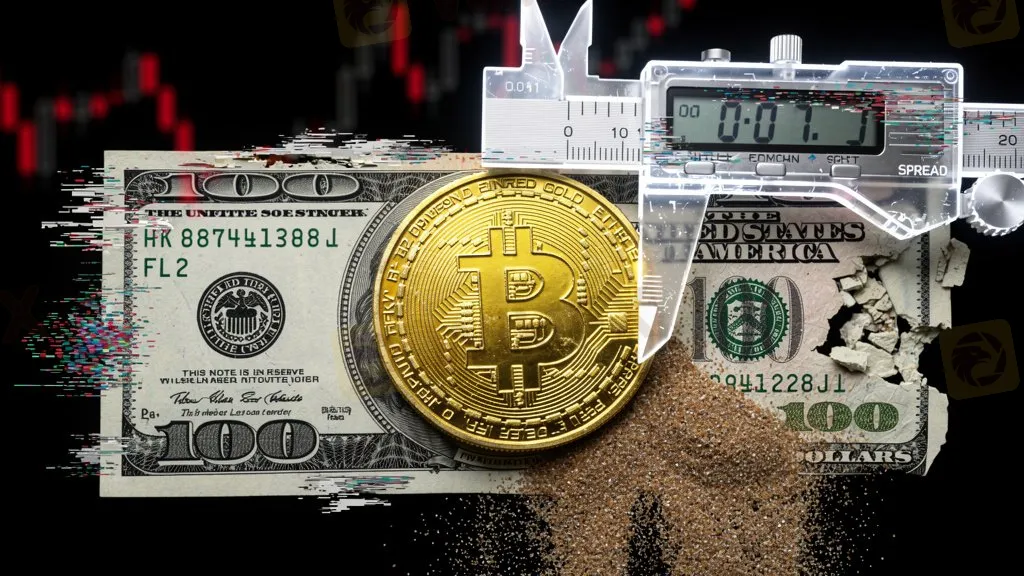
The traditional mechanism of the bid-offer spread—acting as a real-time price for risk and a shock absorber during market stress—is breaking down. A detailed examination of recent market behavior, particularly within the volatile Gold (XAU) and Silver (XAG) sectors, reveals that spreads across asset classes are increasingly functioning as competitive marketing signals rather than accurate reflections of balance sheet exposure.
This structural distortion presents a significant, invisible risk to institutional and retail traders alike, creating an environment where headline liquidity looks robust right up until the moment it evaporates.
The Decoupling of Price and Risk
Historically, a widening spread was the markets natural defense mechanism. It compensated liquidity providers for holding inventory during periods of uncertainty. However, in modern electronic markets, algorithmic competition has compressed spreads to levels that are frequently disconnected from the true cost of risk.
The imperative to offer the “tightest quote” for client acquisition has overridden the fundamentals of hedging and inventory management. Consequently, spreads act less as a stabilizer and more as a rigid constraint. When volatility spikes, these artificially tight spreads cannot absorb the shock, causing the risk to migrate elsewhere in the execution chain.
Precious Metals: The Canary in the Coal Mine
Recent sessions in Precious Metals have served as a critical stress test for this dynamic. Despite headline spreads appearing benign during calmer periods, the sharp intraday moves in Gold and Silver triggered rapid changes in liquidity conditions that pricing frameworks failed to match.
The result is a fragile ecosystem where risk is not priced into the quote but is instead realized through:
- Aggressive Slippage: Traders face execution prices far removed from the displayed bid/ask.
- Inventory Swings: Liquidity providers face sudden, disproportionate P&L swings as hedging costs rise abruptly.
- Reject Rates: Orders are simply unable to be filled at the advertised levels.
The 'Hidden' Cost of Execution
For market participants, the obsession with tight spreads is becoming a distraction from the metric that actually matters: realized cost.
As pricing models optimize for relative positioning against peers rather than underlying liquidity depth, the “spread” becomes a theoretical number. The actual cost of trading during fast markets is now hidden in the discrepancy between the click and the fill.
Analysts warn that relying on collective discipline to widen spreads during stress is a failed strategy due to the structural incentive to undercut competitors. Instead, the solution lies in regime-based pricing—where firms explicitly govern spread behavior based on real-time liquidity and hedging depth, rather than treating spread stability as a marketing necessity.
Until such structural diagnostics are widely adopted, volatility in major pairs and commodities will continue to reveal the brittleness of current pricing models, likely resulting in further episodes where liquidity vanishes exactly when it is needed most.
Disclaimer:
The views in this article only represent the author's personal views, and do not constitute investment advice on this platform. This platform does not guarantee the accuracy, completeness and timeliness of the information in the article, and will not be liable for any loss caused by the use of or reliance on the information in the article.
WikiFX Broker
Latest News
Man Loses Over RM400,000 in Stock Investment Scheme
 WikiFX
Everyone Talks About AI’s Power. Few Ask What It Does to Financial Decisions
WikiFXINTERTRADER Review 2026: Should You Trade With This Broker?
WikiFXMSquare Review 2026: Is this Forex Broker Legit or a Scam?
WikiFXPepperstone Review 2026: Regulation, Complaints, and Execution Risks
WikiFXDollar Surges on Middle East Hostilities
WikiFXDIRECT FX Review 2026: Unverified Regulation and High-Risk Signals
WikiFXReading Forex Pairs: Distinguishing Base and Quote Currencies
WikiFXHYCM UK Swings to £236,304 Loss in 2025 as Costs Outpace Revenue Growth
WikiFXDollar Retreats As Ceasefire Holds
WikiFXCurrency Calculator
USD

CNY
Current Rate:0
Enter amount
USD
Redeemable Amount
CNY
Calculate 