


India Q1 FY27 GDP Growth Hits 7.8%: 3 Scenarios for INR and Gold
India's Q1 FY27 GDP grew 7.8%, beating a 7.4% poll and RBI's 7.0% projection. See three conditional scenarios for INR, rates and gold.
Original

简体中文
繁體中文
English
Pусский
日本語
ภาษาไทย
Tiếng Việt
Bahasa Indonesia
Español
हिन्दी
Filippiiniläinen
Français
Deutsch
Português
Türkçe
한국어
العربية
اردو




Abstract:Despite losing steam in April, gold prices remain elevated. The market is now waiting for the next breakout trigger, with inflation, the Fed, and global trade all in focus.
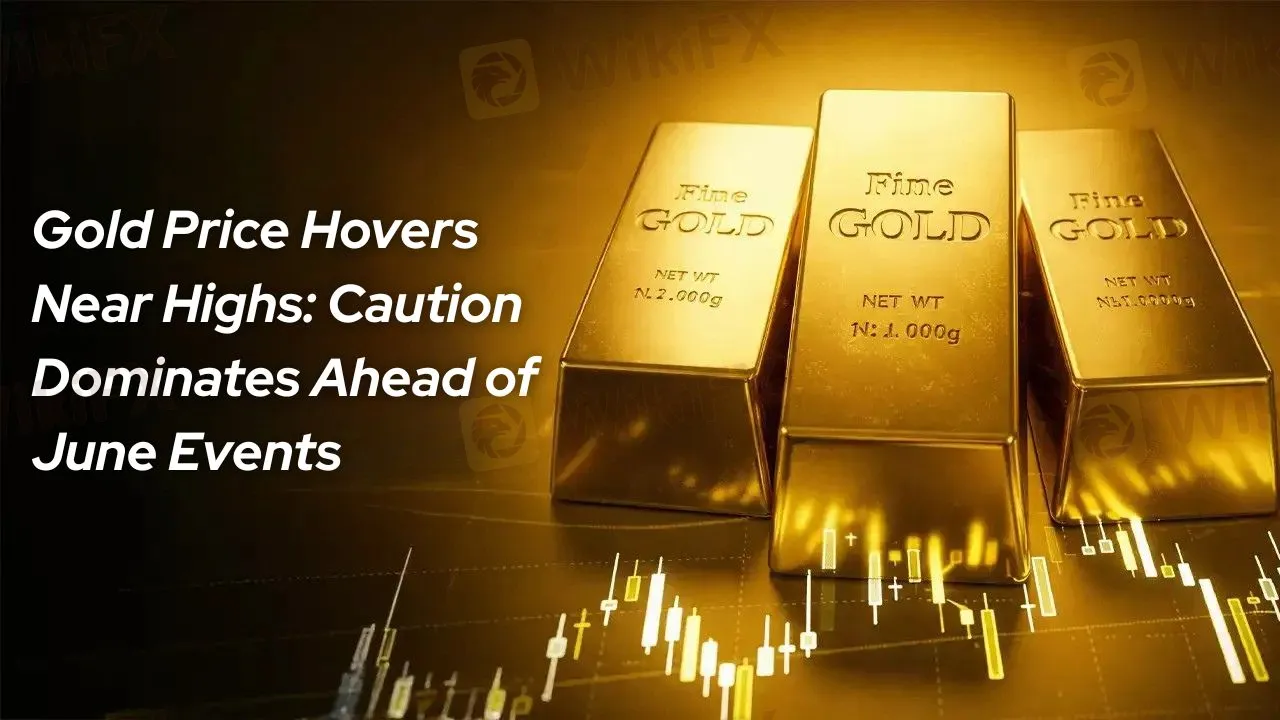
Gold has spent most of May 2025 hovering around historically high levels, with recent prices stabilizing near $3,344 per ounce. While the early-year momentum appears to have slowed, the market remains supported by a mix of global economic caution, currency weakness, and central bank hesitation.
From early January to April, gold surged over 30% on expectations of easier U.S. monetary policy and softer inflation. After peaking above $3,400, the metal entered a corrective phase in mid-April before regaining ground in late May.
Although the price range has narrowed over the past few weeks, traders remain alert. Gold continues to trade within a relatively tight channel, with support forming near $3,200 and resistance holding near $3,400. The lack of directional momentum does not reflect a lack of uncertainty—if anything, markets are on pause ahead of key macro triggers.
A number of unresolved external risks, including cross-border trade disagreements and upcoming economic data releases, are keeping gold investors cautious. While these developments have not yet caused a breakout, they remain part of the underlying support for golds current levels.
Data released in May confirmed that U.S. inflation is slowing, with the April consumer price index coming in at 2.3% year-on-year, the lowest since early 2021. However, despite the improving inflation outlook, the U.S. Federal Reserve has not yet signaled a near-term interest rate cut.
Earlier in the year, markets had priced in potential easing by summer. That has now been delayed—many now expect a policy shift no earlier than autumn. This shift in expectations has not hurt gold significantly, but it has kept buyers from aggressively adding to long positions.
Technically, gold is now sideways within a high range. After bouncing from the $3,120–$3,150 area, price action suggests some buying pressure, but no clear breakout. Traders are eyeing the following key levels:

For now, the metal remains directionally neutral on the weekly chart, while shorter timeframes reflect slightly bullish momentum.
With a fresh month ahead, traders will be watching several catalysts:
So far, the dollar has remained relatively soft, helping gold stay elevated. However, should dollar strength return or the Fed push back harder against rate cut speculation, gold may see more pressure.
Disclaimer:
The views in this article only represent the author's personal views, and do not constitute investment advice on this platform. This platform does not guarantee the accuracy, completeness and timeliness of the information in the article, and will not be liable for any loss caused by the use of or reliance on the information in the article.
India's Q1 FY27 GDP grew 7.8%, beating a 7.4% poll and RBI's 7.0% projection. See three conditional scenarios for INR, rates and gold.
Pakistan remittances reached $3.631 billion in July 2026, up 13% year on year and 4.5% from June, according to the latest State Bank of Pakistan data release. The SBP remittances update is a useful external-sector input, but it is not a currency forecast. This guide explains what the inflow can mean for the Pakistan forex market and USD PKR, and what it cannot prove about the next Pakistan rupee move.

Fed Chair Kevin Warsh is listed to deliver Jackson Hole keynote remarks on 28 August 2026. See the schedule, market scenarios and USD-gold watchlist.
UK retail sales fell 0.5% in July 2026, while the three-month measure rose 1.1%. See the ONS details and what the mixed result may mean for GBP.
WikiFXWikiFXWikiFXWikiFXWikiFXWikiFXWikiFXWikiFXWikiFXWikiFX