Abstract:A U.S. appeals court has revived a class-action lawsuit against Binance.US, which accuses the cryptocurrency exchange of manipulating the HEX token’s price, reopening a legal battle involving significant financial claims and regulatory scrutiny.
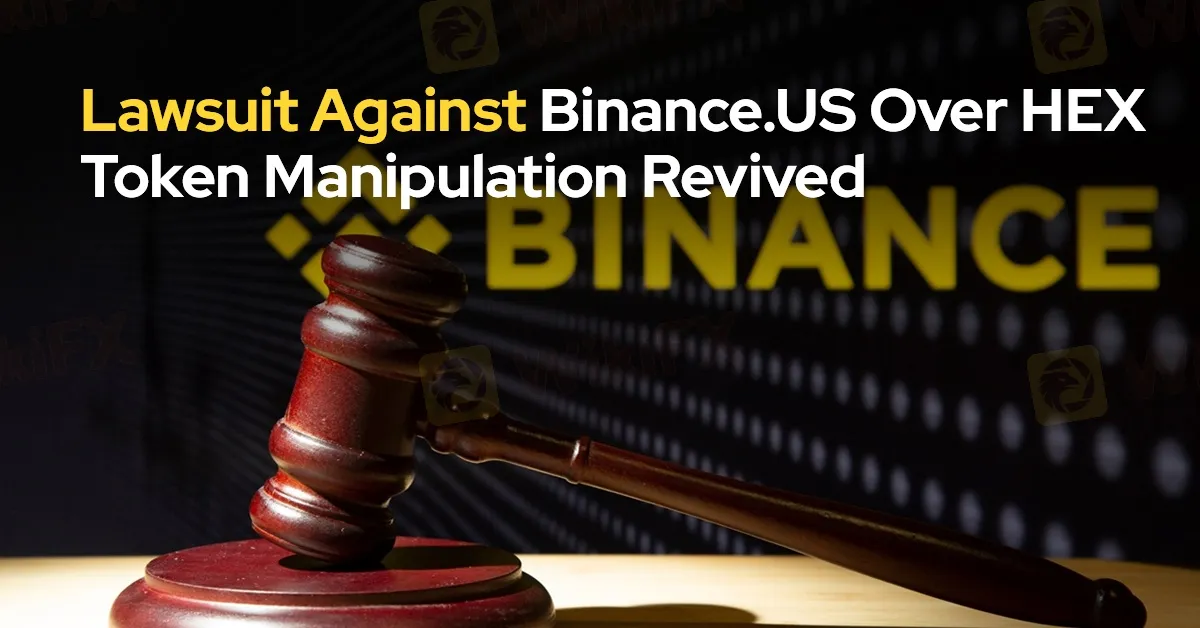
A recent decision by a U.S. appeals court has brought new attention to a class-action lawsuit against Binance.US, alleging that the cryptocurrency exchange manipulated the price of the HEX token. On August 12, the Ninth Circuit panel overturned an earlier dismissal by a district court, allowing the case to proceed. This ruling is significant as it challenges the previous court‘s determination that there was not enough connection between Binance.US’s actions and the state of Arizona to justify the lawsuit.
The case, initially filed by Ryan Cox in 2021, accuses Binance Capital Management and Binance.US of manipulating the HEX tokens ranking on CoinMarketCap, a cryptocurrency tracking platform owned by Binance. Cox alleges that this manipulation resulted in HEX trading at a lower price compared to other Binance cryptocurrencies, which were given higher rankings.

The district court had dismissed the lawsuit in February 2023, ruling that Cox had not demonstrated a direct link between Binance.USs activities and the alleged price manipulation in Arizona. The court had applied a standard for “sufficient minimum contacts” that the appeals court found to be incorrect. The Ninth Circuit panel argued that Binance.US had significant enough connections with the broader U.S. to establish personal jurisdiction, even if the direct link to Arizona was not clear.
The Ninth Circuit's decision means that Cox's allegations of price manipulation are now recognized as valid, and the case will continue through the legal system. This development could have broader implications for how courts handle cases involving cryptocurrency exchanges and their practices.
In a related matter, the HEX token, which was introduced by Richard Heart in December 2019, is facing its own legal challenges. On July 31, 2023, the SEC filed a lawsuit against Heart, accusing him of breaching federal securities laws and defrauding investors of at least $12.1 million. The SEC alleges that Heart used investor funds for personal luxury purchases, such as a 555-carat diamond, expensive watches, and high-end vehicles.
The HEX token itself has seen a dramatic decline, currently trading at $0.004, a significant drop from its peak of $0.51 in September 2021. This decline underscores the volatility of cryptocurrency investments and highlights the ongoing legal and financial challenges facing those involved in the sector.