


Moneta Markets Receives UAE Category 5 Licence
Moneta Global Financial Services LLC has received a Category 5 licence from the UAE Capital Market Authority, establishing a regulated structure for the company’s activities in the country.
Original

简体中文
繁體中文
English
Pусский
日本語
ภาษาไทย
Tiếng Việt
Bahasa Indonesia
Español
हिन्दी
Filippiiniläinen
Français
Deutsch
Português
Türkçe
한국어
العربية
اردو




Abstract:Bastion Capital has incurred substantial penalties due to significant deficiencies in its financial controls, marking the fifth case by the FCA related to cum-ex trading.

Bastion Capital London Limited has been levied a substantial fine of £2,452,700 by the Financial Conduct Authority (FCA) for significant lapses in financial controls linked to cum-ex trading. The FCA found that Bastion Capital inadequately managed the risk of being exploited for fraudulent trading and money laundering purposes.

During the period spanning January 2014 to September 2015, Bastion Capital carried out trades totaling around £49 billion in Danish equities and £22.5 billion in Belgian equities on behalf of clients from Solo Group. The manner in which these transactions were conducted raised significant suspicions of involvement in financial wrongdoing.
It appears that these trades were orchestrated with the intention of facilitating withholding tax reclaims in Denmark and Belgium. As a result, Bastion Capital received a commission amounting to £1.55 million, which constituted a substantial portion of the company's revenue during that specific timeframe.
Furthermore, Bastion Capital was involved in a sequence of trades executed on behalf of 11 Solo Clients within a span of four days. Remarkably, these clients took opposite positions within hours at significantly disparate prices. As a consequence, Ganymede Cayman Ltd, one of the Solo Clients, incurred a substantial loss of €22.7 million, while the remaining ten Solo Clients gained a corresponding advantage.
Bastion Capital exhibited a failure to recognize or intentionally disregarded numerous warning signs associated with these trades. These transactions lacked any legitimate economic purpose and were solely intended to transfer funds from the controller of the Solo Group to their business associates.
Steve Smart, the Joint Executive Director of Enforcement and Market Oversight at the FCA, remarked, “Bastion generated substantial fees by executing trades on behalf of Solo Group, which ultimately aimed to make unlawful tax reclaims from the Danish and Belgian authorities.”
“They failed to recognize evident warning signs that should have alerted them to the potential involvement in financial crimes. It is crucial for firms to effectively manage and mitigate these risks.”
Bastion did not contest the FCA's conclusions and opted for a settlement, which made them eligible for a 30% reduction under the FCA's Settlement Discount Scheme. As Bastion is currently in liquidation, the FCA will become a creditor of the company. However, existing creditors will be given priority over the FCA's financial penalty.
FCA Fights Cum-Ex Trading
This represents the FCA's fifth case involving cum-ex trading, which is part of a broader series of actions taken by the FCA in relation to cum-ex dividend arbitrage cases. To date, the FCA has levied fines exceeding £20 million on firms that have generated fees totaling more than £7 million from such trading activities. Recently, the FCA imposed a significant fine on ED&F Man, and last year, it imposed fines on TJM Partnership Limited.
Cum-ex trading, a contentious form of stock trading, was predominantly practiced in Germany and other parts of Europe before being declared illegal due to its exploitative nature. The term “cum-ex” originates from the Latin words “cum” (with) and “ex” (without), signifying the presence or absence of dividend rights associated with shares.
In this type of trading, both the initial bank and the stock borrower would simultaneously claim tax refunds for capital gains tax on the same stock, effectively enabling them to obtain twice the amount of taxes originally paid. This exploitation of a loophole in the system allowed for the diversion of funds from the state treasury.

Disclaimer:
The views in this article only represent the author's personal views, and do not constitute investment advice on this platform. This platform does not guarantee the accuracy, completeness and timeliness of the information in the article, and will not be liable for any loss caused by the use of or reliance on the information in the article.

Moneta Global Financial Services LLC has received a Category 5 licence from the UAE Capital Market Authority, establishing a regulated structure for the company’s activities in the country.
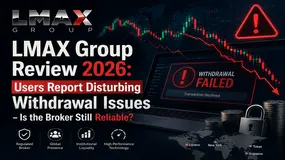
Did LMAX Group deny you withdrawals citing frozen funds at the wallet service provider’s end? Have you been so exhausted by the endless withdrawal hassles that you have begun to stop investing in the platform? Has this UK-based liquidity provider even questioned your fund ownership status when you requested withdrawals? You are not alone! Many users have complained about these issues while sharing their LMAX Group reviews.

A fresh Pune police probe has reportedly booked 57 people in connection with an alleged forex investment scam involving a trading platform. This India-focused report separates the allegation from confirmed regulatory rules, explains how fake trading app scams use social media, fabricated profits, third-party bank accounts and blocked withdrawals, and shows how investors can verify an online forex trading platform through RBI and SEBI resources. It also places the case within Pune's wider pattern of online investment fraud and provides an immediate response checklist, including the National Cyber Crime Reporting Portal and helpline 1930.
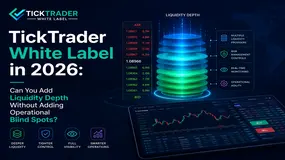
A TickTrader white label can look like the fastest route to a modern branded trading environment, but a fast launch is not the same as a controlled launch. This 2026 broker guide explains what the TickTrader platform is, where a Soft-FX broker solution can sit in a wider operating stack, and how to evaluate the difference between a white label, a server licence, and a connected CRM or Client Office setup. It also unpacks TickTrader cost beyond the monthly headline, including implementation, integration, support, data, governance, migration, and exit assumptions. Use the practical questions, workflow tests, comparison table, and launch checklist to assess a Soft-FX TickTrader provider without mistaking a feature demo for evidence that your brokerage can run the service safely at scale.
WikiFXWikiFXWikiFXWikiFXWikiFXWikiFXWikiFXWikiFXWikiFXWikiFX