Doo Group Rebrands UK and South Africa Units to RKX
Doo Group rebrands its UK and South Africa entities to RKX, reflecting regulatory updates and broader strategic changes.
简体中文
繁體中文
English
Pусский
日本語
ภาษาไทย
Tiếng Việt
Bahasa Indonesia
Español
हिन्दी
Filippiiniläinen
Français
Deutsch
Português
Türkçe
한국어
العربية
Abstract:The United States bankruptcy court approves the liquidation plans of Voyager Digital, a bankrupt crypto lender, allowing the company to conclude its reorganization efforts, refunding approximately 35% of customer deposits in crypto assets while FTX seeks to recover loan repayments made to Voyager, potentially benefiting its customers with a higher recovery rate of 63.74%.
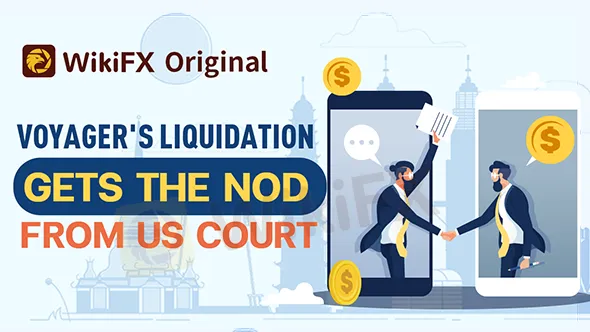
The liquidation plans of Voyager Digital, a bankrupt crypto lender, have been authorized by a United States bankruptcy court. This approval, given by Judge Michael Wiles during a Manhattan hearing, allows Voyager to conclude its Chapter 11 reorganization efforts, as stated in court documents.
Voyager's legal team had previously announced that the company would undertake a self-liquidation process and cease operations after Binance.US withdrew from a proposed $1 billion acquisition of Voyager's assets. While the American branch of the prominent cryptocurrency exchange did not disclose a specific reason for backing out, it alluded to “the hostile and uncertain regulatory climate in the United States.”
Following the collapse of Terra-LUNA, which had a profound impact on the global cryptocurrency industry, Voyager filed for bankruptcy protection in July of the previous year. Prior to its downfall, the crypto lender had sent a default notice to Three Arrows Capital (3AC), based in Singapore, due to the latter's failure to make payments on a crypto loan exceeding $670 million. However, 3AC also faced challenges amidst the market downturn and was subsequently ordered by a court in the British Virgin Islands to liquidate its assets.
Furthermore, in September of the same year, FTX's US affiliate had initially secured a $1.4 billion agreement to acquire Voyager Digital's assets. However, the deal collapsed the following month following FTX's own financial difficulties.
In the latest court filing, Voyager Digital stated that it anticipates refunding approximately 35% of its customers' crypto deposits as part of the planned liquidation. According to Reuters, Judge Wiles' approval enables the bankrupt crypto lender to return around $1.33 billion worth of crypto assets to its customers.
Conversely, FTX, also facing bankruptcy, is actively pursuing the recovery of approximately $445.8 million in loan repayments made to Voyager prior to its demise. A successful outcome for Voyager in the litigation could potentially result in a higher recovery rate of 63.74% for its customers, as outlined in the court filing.


Disclaimer:
The views in this article only represent the author's personal views, and do not constitute investment advice on this platform. This platform does not guarantee the accuracy, completeness and timeliness of the information in the article, and will not be liable for any loss caused by the use of or reliance on the information in the article.

Doo Group rebrands its UK and South Africa entities to RKX, reflecting regulatory updates and broader strategic changes.

Before trusting any broker, you need to check if it is properly regulated. The safety of your capital and fair trading conditions depend completely on how well the broker is supervised. For a thorough check on brokers like BlackBull Markets, websites like WikiFX can give you collected information, license tracking and user reviews, providing an important independent check. This article aims to answer a key question: Is BlackBull Markets a safe and regulated broker? The simple answer is yes, but the regulation setup uses two different licenses that every trader needs to understand. We will break down the BlackBull Markets regulation system, explain each BlackBull Markets license, and make clear what this setup means for you as a trader. Our review is based on facts you can check and aims to give you an unbiased, expert view.

When traders ask, "Is BlackBull Markets safe or a scam?", they want a simple answer to a hard question. The facts show two different sides. The broker began operating in 2014 and has a strong license from New Zealand's Financial Markets Authority (FMA). It also has an "Excellent" rating on review sites such as Trustpilot. But when searching for "BlackBull Markets complaints," you find many negative user stories, including withdrawal issues and poor trading conditions. This article goes beyond simple "safe" or "scam" labels. We want to carefully look at both the good reviews and common problems, comparing them with how the broker actually works and its licenses. This fact-based approach will give you the full picture of its user reputation, helping you make your own smart decision.

Is BlackBull Markets legit? Are the "BlackBull Markets scam" rumors you see online actually true? These are the important questions every smart trader should ask before exposing capital to markets. The quick answer isn't just yes or no. Instead, we need to look at the facts carefully. Our goal in this review is to go beyond fancy marketing promises and do a complete legitimacy check. We will examine the broker's rules and regulations, look at its business history, break down common user complaints, and check out its trading technology. This step-by-step analysis will give you the facts you need to make your own smart decision about whether BlackBull Markets is a good and safe trading partner for you.