Abstract:AI has significantly impacted forex trading, offering benefits like speed, efficiency, and improved accuracy. However, challenges like overfitting and lack of intuition persist. Expert Advisors (EAs) automate trading decisions on MetaTrader platforms, and WikiFX provides a platform connecting traders with reliable EAs. Balancing AI capabilities with human intuition is crucial for successful forex trading.
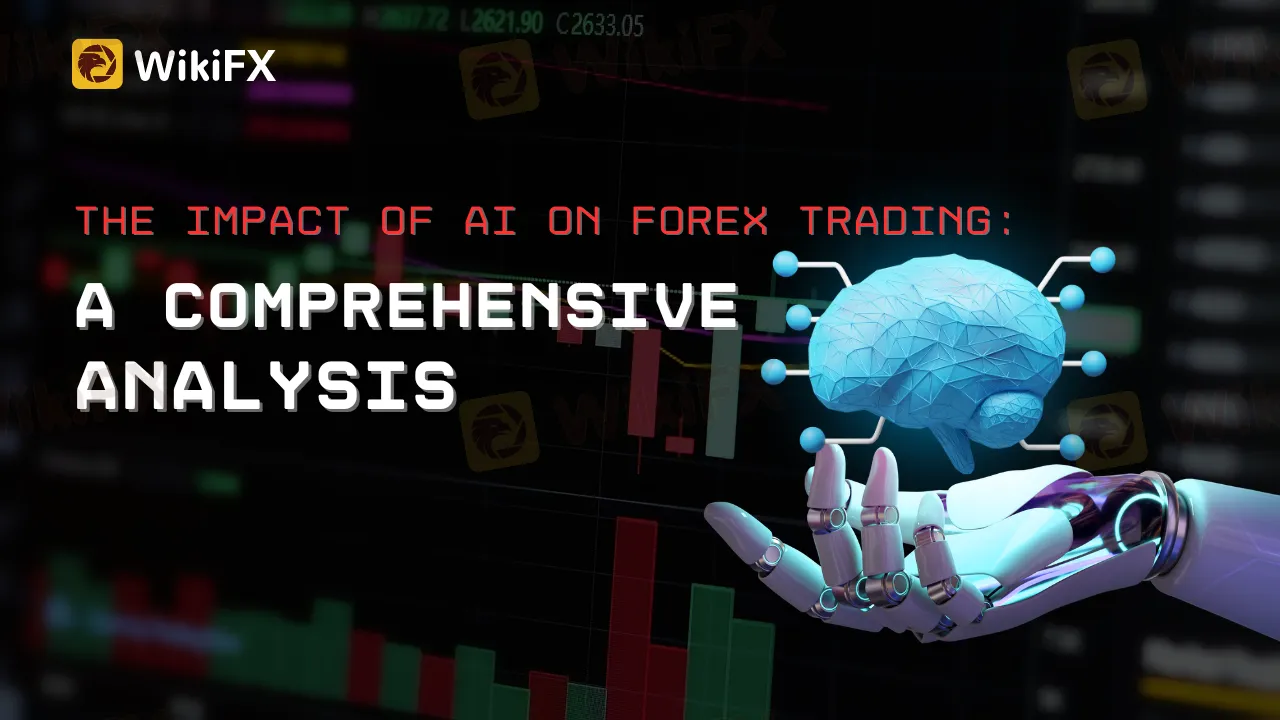
Artificial intelligence (AI) has transformed several sectors in recent years, from banking to healthcare. The exchange of currencies on international markets, or forex trading, is one sector where AI has had a big influence. This article explores the use of AI in FX trading and weighs the possible advantages and disadvantages of this technology.
 Contents
The Role of AI in Forex Trading
Technical and fundamental analysis have always been used by forex traders to forecast currency fluctuations. While fundamental analysis takes into account variables like economic statistics, interest rates, and political events, technical analysis focuses on previous price movements and market patterns. These techniques, however, are often time-consuming and need a thorough understanding of market factors.
The ability of AI, on the other hand, to quickly and thoroughly evaluate large volumes of data makes it a desirable tool for FX trading. A kind of AI known as machine learning algorithms can see patterns in past data and change their plans as more knowledge becomes available. This enables trading platforms powered by AI to forecast currency moves with an accuracy that may be challenging for human traders to match.
The Benefits of AI in Forex Trading
The following are some of the main benefits of utilizing AI in forex trading:
Speed and Efficiency: AI systems can process and analyze enormous volumes of data considerably more quickly than human traders, enabling faster trade execution.
Improved Accuracy: AI may be able to increase forecast accuracy, which might result in more successful trades, by spotting patterns and trends in past data.
Emotionless Trading: AI takes away the emotional components of trading, such as fear and greed, which may impair human judgment and result in losses.
Adaptability and Customization: AI algorithms may be modified to accommodate specific trader preferences, such as risk tolerance and trading style. AI systems may also modify their methods in real-time to respond to shifting market circumstances.

The Drawbacks of AI in Forex Trading
Despite the potential advantages, applying AI in FX trading has several difficulties and disadvantages.
Overfitting: Overly complicated or optimized AI models may perform poorly in real-world settings and exhibit poor generalization.
Lack of Intuition: AI systems can find it difficult to comprehend and respond to abrupt, unforeseen events that might have a big influence on currency movements, including political crises or natural catastrophes.
Dependency: Relying only on AI systems may cause traders to become complacent, unduly reliant on technology, and incapable of refining their own analytical abilities.
Ethical Issues: Using AI in forex trading brings up ethical issues including the possibility of job loss and the effect of AI-driven trading techniques on market stability.
The Evidence: Does AI Really Help Predict Currency Movements?
Numerous research and real-world examples have shown that AI is capable of accurately forecasting currency changes in forex trading. For instance, with varied degrees of success, academics have predicted currency movements using machine learning techniques like support vector machines, neural networks, and genetic algorithms.

However, not all applications of AI in forex trading are successful. Prediction accuracy may vary based on the particular method utilized, the caliber of data provided, and the time horizon has taken into account. Furthermore, even if AI may sometimes beat human traders, it may still make mistakes.
The Future of AI in Forex Trading
It's conceivable that AI technology will play a bigger part in FX trading as it develops. The sophistication of trading systems driven by AI may increase along with their capacity for greater prediction and real-time information adaptation.
AI is also anticipated to be a key factor in the creation of new trading methods as well as the improvement of current ones. AI might be used, for instance, to improve risk management, find arbitrage possibilities, and enhance trade execution. Additionally, combining AI with other cutting-edge technologies like blockchain and the Internet of Things (IoT) might result in the creation of more sophisticated and safe FX trading systems.
Understanding Expert Advisors (EA)
An Expert Advisor is a piece of software that automates trading choices by following a set of rules and methods. EAs operate on the MetaTrader trading platform, the most common of which are MetaTrader 4 (MT4) and MetaTrader 5 (MT5). Traders can either develop their own EAs or use pre-built ones provided by forex service providers like WikiFX.

How WikiFX Provides EA to Traders
WikiFX offers a comprehensive platform that connects forex traders with reliable EAs. Traders can access various EAs, each with different trading strategies and risk profiles. WikiFX carefully selects and verifies the EAs available on their platform, ensuring that they meet strict performance and reliability criteria. Additionally, WikiFX provides in-depth reviews, ratings, and user feedback to help traders make informed decisions when selecting an EA.
You can check out WikiFX EA shop through this link: https://vps.wikifx.com/en/eashop.html
Conclusion
In summary, AI has shown to be a useful tool for forecasting currency changes in forex trading. AI-powered trading systems may provide several advantages, such as enhanced efficiency, decreased emotional biases, and the capacity to respond to changing market circumstances, by swiftly and correctly evaluating huge volumes of data. However, there are several difficulties with AI, such as overfitting, a lack of intuition, and ethical issues.
The research implies that AI may be useful in anticipating currency fluctuations, but the efficacy of this prediction relies on the algorithms used and the quality of the data. AI's position in forex trading is projected to grow and become more complex as the technology develops, providing traders with new chances to control risk and enhance their tactics.
In the end, achieving the ideal balance between leveraging AI's capabilities and keeping human intuition and knowledge will be the key to successful FX trading. Forex traders must adapt to and embrace the technology while also being aware of its drawbacks and possible traps as AI continues to change the forex trading scene.
Download and install the WikiFX App on your smartphone to stay updated on the latest news.
Download the App: https://social1.onelink.me/QgET/px2b7i8n