

Money Plant FX Review: High-Risk Forex Broker Warning
Money Plant FX is offshore, unregulated, and flagged high risk, with traders alleging zeroed balances. Check the facts before you open an account.
简体中文
繁體中文
English
Pусский
日本語
ภาษาไทย
Tiếng Việt
Bahasa Indonesia
Español
हिन्दी
Filippiiniläinen
Français
Deutsch
Português
Türkçe
한국어
العربية
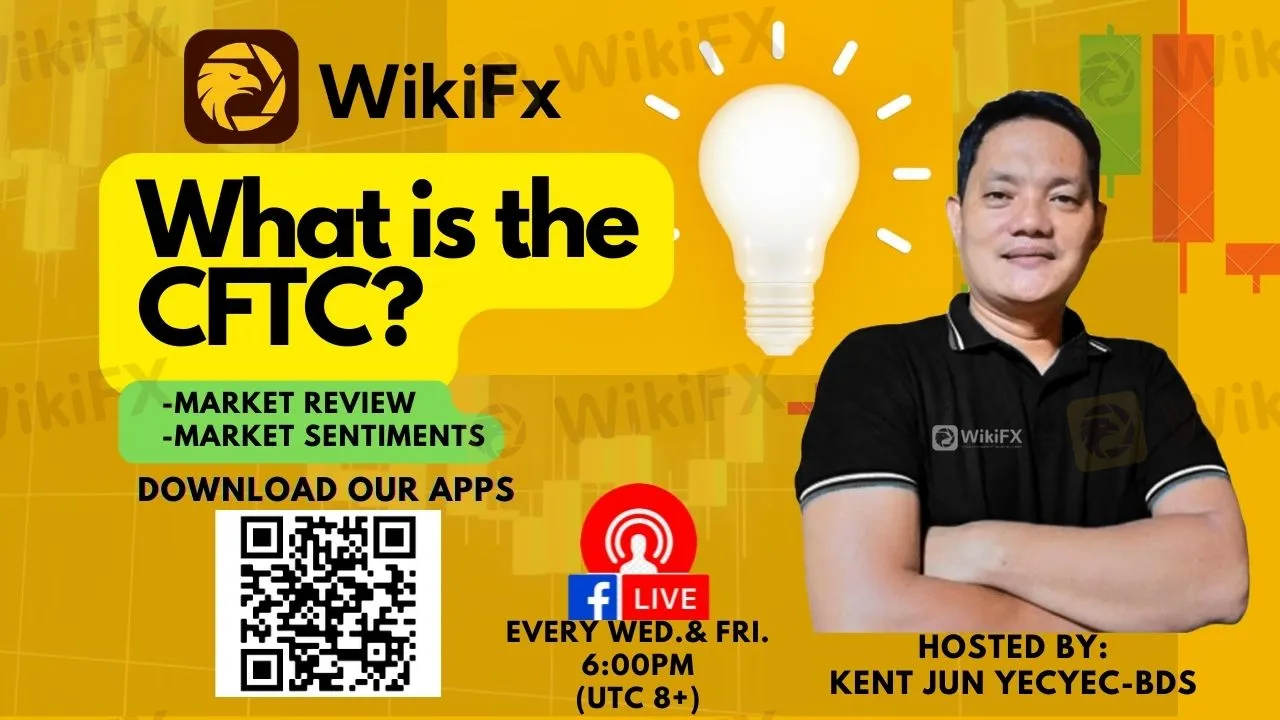
Abstract:The CFTC and SEC are regulatory authorities in the United States. How are they dissimilar? Why is the forex market regulated by the CFTC instead of the SEC?
The purpose of the Commodity Futures Trading Commission (CFTC) is to promote the integrity, resiliency, and vitality of the United States' derivatives markets through good regulation. The Commodity Futures Trading Commission (CFTC) was established in 1974, replacing the Commodity Exchange Authority, whose jurisdiction was limited to agricultural commodities. In contrast, the CFTC is authorized to regulate futures, swaps, and options markets for all commodities. The mission of the CTFC is to safeguard investors from manipulation, unethical trading techniques, and fraud.
Let's begin with the fundamentals. The “C” in CTFC represents Commodity, whereas the “S” in SEC represents Securities. The CTFC supervises commodities, whereas the SEC regulates securities. That should be the case, correct?
Obviously, these two names have different meanings, but for the sake of clarity, let's examine their legal definitions.
In a simple sense, we can define securities as tradable financial instruments. Here is the definition of securities according to Title XV, Section 77b(a)(1) of the United States Code:

Disclaimer:
The views in this article only represent the author's personal views, and do not constitute investment advice on this platform. This platform does not guarantee the accuracy, completeness and timeliness of the information in the article, and will not be liable for any loss caused by the use of or reliance on the information in the article.

Money Plant FX is offshore, unregulated, and flagged high risk, with traders alleging zeroed balances. Check the facts before you open an account.

When looking at a forex broker, traders often find confusing and mixed information. This is exactly what happens with ACY Securities. On one side, it's a broker that has been operating for 10-15 years and has a good license from the Australian Securities and Investments Commission (ASIC). On the other hand, there are many serious complaints that show a very different story. As of early 2026, websites, such as WikiFX, have lowered the broker's score because they received over 156 user complaints, with a total of 182 "Exposure" reports filed. This creates a big problem for people who might want to use this broker. The main question this article will answer is: Is ACY SECURITIES legit, or are the many ACY SECURITIES scam claims actually true about how it does business? We will look at facts we can prove, study the broker's rules and regulations, examine the patterns in user complaints, and give a clear, fact-based answer about the risks of working with this broker. Our goal is to cut thr

ACY Securities shows a complicated picture for traders. On one side, it is a well-known broker that has been running for more than ten years and has a license from a top-level regulator. On the other side, it is a company that faces many serious complaints from users and official warnings from several international financial authorities. This ACY SECURITIES Review aims to explain these differences. We will give a fair and thorough analysis of both what the broker advertises and the serious risks that users have reported. At its heart, ACY Securities is a story of attractive trading conditions that are overshadowed by major user complaints and questions about whether it can be trusted. Our goal is to examine the facts, look at the evidence, and help you make a completely informed decision about your capital’s safety.

This ZarVista Review provides an analysis based on verified public data and direct user-reported experiences. From the outset, it is essential to note that ZarVista, formerly known as Zara FX, exhibits a profile that indicates a high potential risk for traders. This conclusion is not made lightly; it is supported by its low regulatory score, a large volume of serious user complaints, and operational transparency issues.