

عالمی بروکر ریگولیشن چیک کرنے والا ایپ
WikiFX
اردو
简体中文
繁體中文
English
Pусский
日本語
ภาษาไทย
Tiếng Việt
Bahasa Indonesia
Español
हिन्दी
Filippiiniläinen
Français
Deutsch
Português
Türkçe
한국어
العربية
اردو


Why Malaysia’s Forex Reserves Aren’t Just a Big Savings Account

WikiFX
|


خلاصہ۔:Bank Negara Malaysia publishes daily ringgit exchange rates and monthly official reserve assets. This article explains what these figures mean, how to read them without confusion, and the common misunderstandings beginners should avoid.

 فہرست
فہرستWhat Kind of Data Does Bank Negara Publish?
Bank Negara Malaysia (BNM) releases daily quotes for the ringgit against major currencies, along with end-of-day buying and selling rates. Every month, it also publishes the country‘s official reserve assets. These figures are free, public, and updated on BNM’s website.
But many beginners treat this data as a simple scorecard. They assume a rising reserve number is always good, and a falling ringgit is always bad. This article clears up how to read both sets of numbers, what they actually measure, and what they cannot tell you.
Exchange Rates and Reserves: Two Sides of the Same Coin
Before diving into the tables, lets define the basic terms.
- Middle rate: The benchmark rate BNM quotes at 9 a.m. Malaysia time, which is the midpoint between the buying and selling rates used by banks. It‘s not a transaction rate for you as a retail customer.
- Buying and selling rates: These are what banks quote for buying or selling the ringgit against a foreign currency. The spread between them is normal and reflects transaction costs.
- Official reserve assets: The liquid foreign-currency assets BNM holds. They include foreign currency deposits, IMF reserve positions, Special Drawing Rights (SDRs), gold, and other reserve assets. They serve as a buffer to manage ringgit volatility and meet external payment obligations.
Knowing these terms helps you avoid the most common beginner mistake: thinking that the middle rate is the exchange rate you’ll get at a money changer.
A Hypothetical Walk-Through: Reading the Numbers
Lets build a simple, imaginary example to see how an analyst reads the data.
Imagine BNMs exchange rate table for a particular day shows:
- USD/MYR middle rate: 4.2500
- Buying rate: 4.2200
- Selling rate: 4.2800
If you‘re a Malaysian importer needing US dollars, the selling rate tells you roughly how many ringgit you’ll pay for each dollar. If you own US dollars and want ringgit, the buying rate is your reference. The middle rate is the headline you see in the news, but your actual transaction cost is higher.
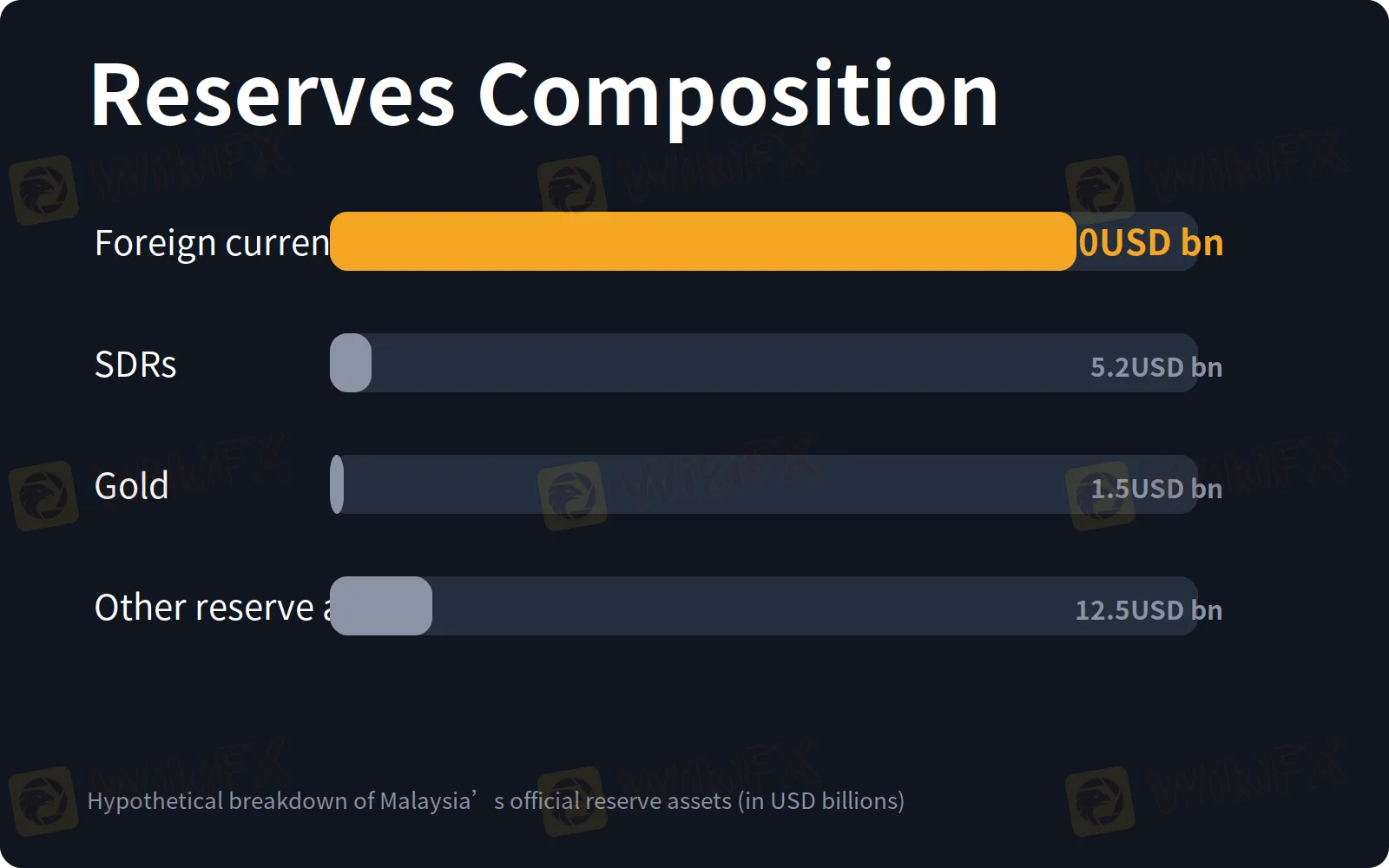
Now turn to the reserves report for the same period. Suppose BNMs statement shows total reserves of USD 110 billion, broken down as:
- Foreign currency reserves: USD 90 billion
- IMF reserve position: USD 0.8 billion
- SDRs: USD 5.2 billion
- Gold: USD 1.5 billion
- Other reserve assets: USD 12.5 billion
An analyst might note that foreign currency deposits make up over 80% of the total, which is typical. A sudden drop in foreign currency reserves without a corresponding rise in other components could signal that BNM has been selling US dollars in the spot market – perhaps to smooth excessive ringgit volatility. But you can‘t confirm that from the raw numbers alone; you’d need additional context like market turnover data.
Common Beginner Mistakes When Interpreting This Data
Beginners often misunderstand what the reserves figure represents. Here are the most frequent errors:
- Treating reserves as national savings. Reserves are not a piggy bank the government can spend on development projects. They are held for external transactions and monetary policy operations.
- Believing a higher ringgit number is always “stronger.” In a floating-rate system, a rising USD/MYR means the ringgit has depreciated – it now costs more ringgit to buy one US dollar. That can happen for many reasons, not all of which are negative for the economy.
- Thinking BNM can defend the ringgit indefinitely with reserves. Reserves are finite. Sustained capital outflows can deplete them faster than many novices expect. Central banks typically aim to prevent disorderly movements, not fix the exchange rate at a particular level.
- Overlooking the gold component. Gold is part of reserves but its value is marked to market. A spike in gold prices can inflate the headline reserve number without any actual increase in BNMs foreign currency holdings. That can mislead you if you only look at the total.
What the Data Can – and Cannot – Tell You
Bank Negara‘s open data helps you understand the ringgit’s current market value and the countrys insurance buffer against external shocks. It does not, however, forecast where the ringgit is headed next. Exchange rates move because of trade flows, interest rate differentials, global risk sentiment, and countless other factors beyond the scope of a single daily fix.
Use the data to compare today‘s conditions with last month’s or last year‘s, to gauge how reserves are trending, and to build a picture of Malaysia’s external position. But never assume a change in the total reserve number is a trading signal. The figures are descriptive, not predictive. Treat them as one piece of a much larger puzzle.
ڈس کلیمر:
یہ مضمون صرف مصنف کی ذاتی رائے پر مبنی ہے، یہ پلیٹ فارم کی سرمایہ کاری کی مشورہ نہیں ہے۔ پلیٹ فارم مضمون کی معلومات کی درستگی، مکملیت اور بروقت ہونے کی کوئی ضمانت نہیں دیتا، اور مضمون کی معلومات پر اعتماد یا استعمال سے ہونے والے کسی بھی نقصان کی ذمہ داری قبول نہیں کرتا۔
